Artificial intelligence (AI) is transforming dental scanning and design by enhancing precision, speed, and consistency in digital workflows. From intraoral scanners to CAD software for restorations, AI algorithms process vast datasets of images, scans, and clinical cases to automate tasks, reduce errors, and support clinicians. As of 2026, AI integration has moved from experimental to practical, delivering measurable improvements in diagnostics, treatment planning, and prosthetic fabrication across global practices.
This article examines AI applications in scanning and design, supported by real-world data on accuracy gains, time savings, and clinical outcomes. Dental professionals worldwide—from urban clinics to high-volume labs—benefit from these advancements, making AI a cornerstone of modern digital dentistry.
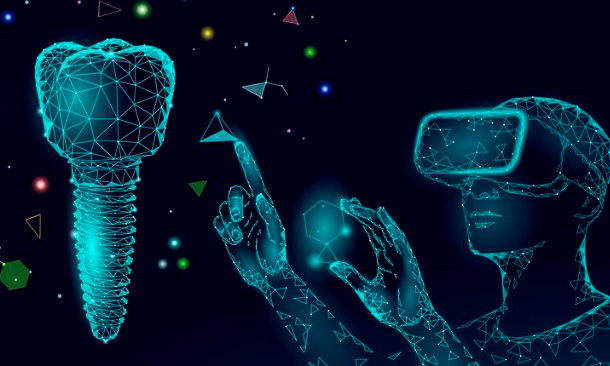
AI in Dental Scanning: Enhancing Data Acquisition and Quality
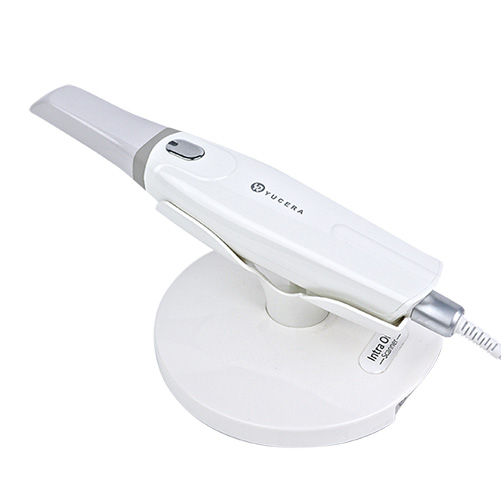
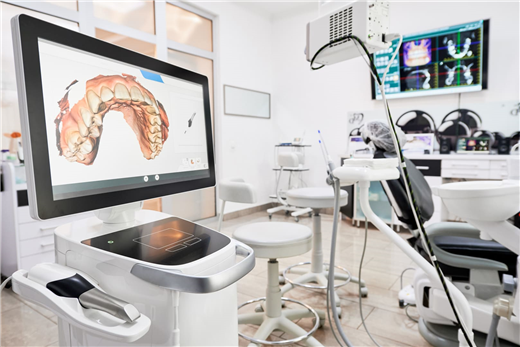
Intraoral scanners capture 3D images of teeth, gums, and occlusal surfaces. AI integration optimizes this process through several key functions:
-
Noise Reduction and Artifact Elimination — AI algorithms automatically remove soft tissue interference, saliva artifacts, and scanner noise in real time, producing cleaner 3D models. This reduces the need for rescans and improves data quality for downstream design.
-
Margin Detection and Auto-Segmentation — AI identifies tooth margins, preparation lines, and anatomical landmarks with high precision, minimizing manual adjustments. It segments teeth, gingiva, and restorations automatically, accelerating model preparation.
-
Real-Time Diagnostics and Quality Feedback — During scanning, AI flags potential issues like incomplete coverage, undercuts, or alignment errors. Some systems provide immediate feedback on scan completeness and accuracy, guiding operators for optimal results.
-
Speed and Efficiency Gains — AI-enhanced scanning shortens full-arch capture times while maintaining or improving accuracy compared to traditional impressions. Digital impressions already offer comparable or superior precision, and AI further refines this by optimizing alignment and stitching.
Clinical benefits include fewer remakes, better marginal fit for crowns and bridges, and enhanced patient comfort through faster, powder-free workflows in many cases.
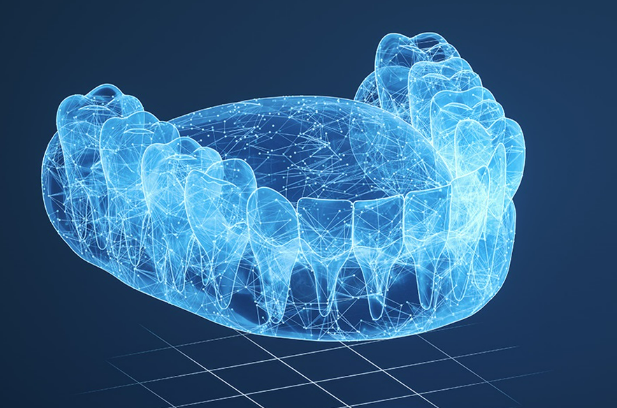
AI in Dental Design (CAD): Automation and Predictive Capabilities
Once scans are acquired, CAD software designs restorations like crowns, bridges, veneers, inlays, onlays, and implant components. AI elevates design through intelligent automation:
-
Automated Restoration Design — AI analyzes patient anatomy, occlusion, and material properties to generate initial designs. It suggests optimal crown contours, thickness, and emergence profiles, reducing design time from manual hours to minutes.
-
Occlusion and Functional Analysis — AI simulates bite forces, detects interferences, and optimizes occlusal contacts for balanced function. This predictive modeling minimizes adjustments during placement.
-
Margin and Preparation Optimization — Building on scan data, AI refines margins, ensures proper reduction depths, and predicts potential weak points in the design.
-
Material Selection and Predictive Outcomes — AI recommends materials (e.g., zirconia thickness) based on patient-specific factors and forecasts longevity, wear, or fracture risk using trained models from millions of cases.
-
Implant Planning Integration — In complex cases, AI supports surgical guide design by analyzing bone density, nerve paths, and angulation for precise placement. Studies show AI reduces planning time from 45 minutes to about 8 minutes and improves bone segmentation accuracy to 96.4% (vs. human ~85%).
These capabilities lead to highly personalized restorations with better fit, esthetics, and durability.
Key Benefits and Supporting Data
AI integration delivers quantifiable advantages:
-
Accuracy Improvements — AI boosts caries detection sensitivity to 80–92% and specificity to 75–90%. Overall diagnostic accuracy can increase by 15–30%, with some systems achieving 20% higher caries detection rates.
-
Time Savings — AI-assisted CAD reduces case planning by 30–45 minutes and overall workflow time significantly. Remake rates drop by ~18%, and implant surgery time decreases by 15–20%.
-
Consistency and Reduced Variability — AI standardizes outputs across providers, with studies showing 23% increases in early detection and lower diagnostic variation.
-
Patient Outcomes — Better-fitting restorations, fewer adjustments, and predictive insights lead to higher satisfaction and longevity. Intraoral scanning with AI enhances prosthetic fit and reduces chair time.
The broader dental CAD/CAM market, heavily influenced by AI, is projected to grow from ~USD 2.63 billion in 2026 to USD 5.65 billion by 2034 at a CAGR of 10.01%. AI-powered systems are a key driver, streamlining design and manufacturing.
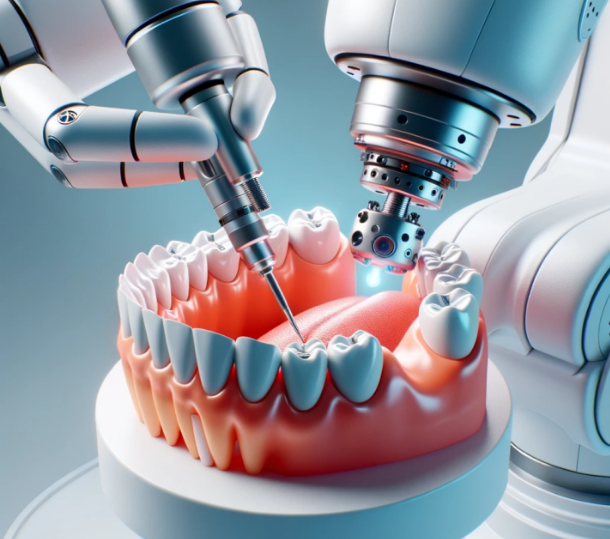
Challenges and Considerations
Despite benefits, challenges remain:
-
Data Privacy and Ethics — Handling sensitive patient scans requires robust security and compliance (e.g., GDPR/HIPAA equivalents globally).
-
Validation and Regulation — AI models need extensive clinical validation; performance can vary by population demographics or scanner quality.
-
Integration Costs and Training — Initial setup, software licensing, and staff training create barriers, especially in smaller practices or emerging markets.
-
Over-Reliance Risk — AI supports but does not replace clinical judgment; human oversight is essential for complex cases.
Global adoption varies, with higher rates in North America and parts of Europe/Asia-Pacific due to infrastructure, while training initiatives accelerate uptake elsewhere.
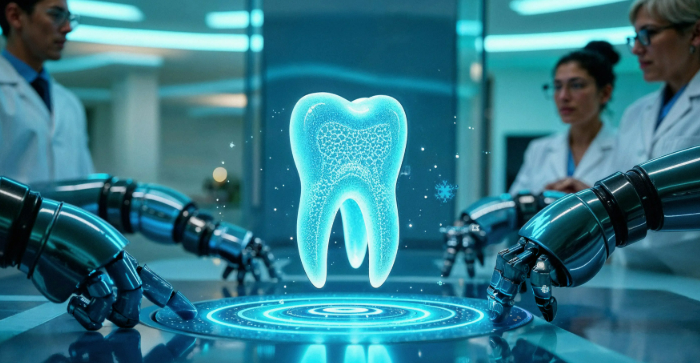
2026 Trends and Future Outlook
In 2026, AI trends include:
-
Cloud-Based AI Processing — Real-time collaboration between chairside scans and remote design/AI analysis.
-
Multi-Modal Integration — Combining intraoral scans, CBCT, photos, and patient history for comprehensive AI-driven planning.
-
Predictive and Generative AI — Advanced models generate multiple design options or simulate long-term outcomes.
-
Chairside AI Assistance — Instant feedback during scanning and design for same-day restorations.
-
Global Expansion — Wider adoption in Asia-Pacific and Latin America driven by affordable cloud solutions and mobile training.
Future advancements may include fully automated design-to-mill pipelines, AI-augmented robotics for placement, and personalized treatment predictions based on genetic/oral microbiome data.
Conclusion
AI integration in dental scanning and design marks a pivotal shift toward more accurate, efficient, and patient-centered dentistry. From noise-free scans and precise margin detection to automated CAD designs and predictive planning, AI delivers time savings of 30–45 minutes per case, accuracy gains up to 20–30%, and reduced remakes—empowering clinicians worldwide.
As the dental CAD/CAM market expands at double-digit CAGRs, practices adopting AI today gain competitive advantages in efficiency, outcomes, and patient satisfaction. Continued validation, ethical frameworks, and accessible training will ensure broad global benefits. Embrace AI as a powerful collaborator to elevate digital dentistry in 2026 and beyond.




 中 文
中 文