



 中 文
中 文
Inadequate Zirconia Drying: The Hidden Cause of Chipping, Cracking & Marginal Leakage – Root Cause Analysis & Fixes (2026 Guide)
2026-03-13
2026-06-03
As dental laboratories continue to invest in digital dentistry, choosing the right CAD/CAM workflow has become just as important as selecting the right equipment. One of the most common questions laboratory owners face is whether to adopt an open system or a closed system.
While both approaches can produce high-quality restorations, they differ significantly in terms of flexibility, compatibility, long-term costs, and future scalability.
Understanding these differences can help your laboratory make a smarter investment and avoid workflow limitations as your business grows.
An open system allows laboratories to use equipment, software, and materials from different manufacturers within the same workflow.
For example, a laboratory may use:
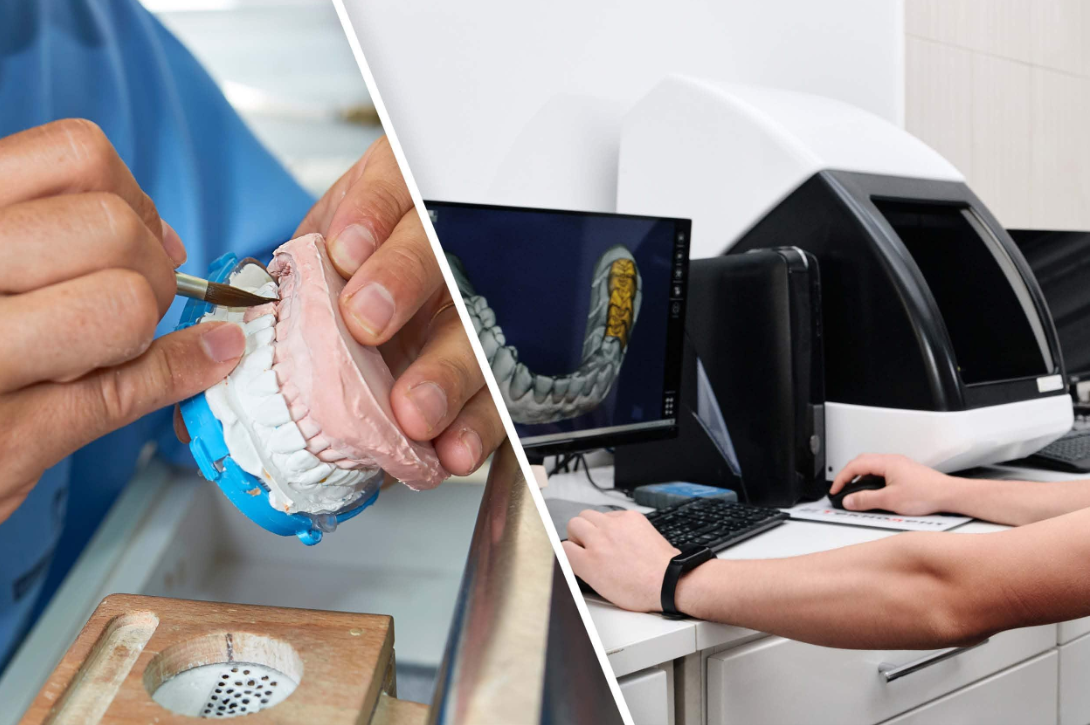
Most open systems support standard file formats such as STL, enabling smooth communication between different devices and software platforms.
Key Advantages
For growing laboratories, an open workflow often provides more freedom to adapt to changing business needs.
A closed system is designed as a complete ecosystem where scanners, software, manufacturing equipment, and materials are intended to work together within the same platform.
In many cases, users are encouraged or required to stay within the same workflow environment.
Key Advantages
For smaller clinics or first-time digital users, a closed system may offer a straightforward entry into digital dentistry.
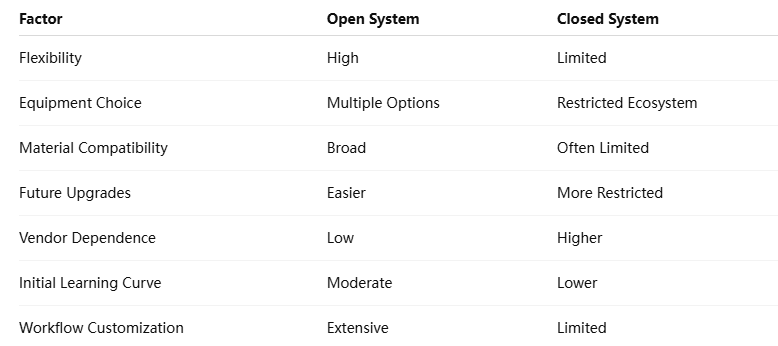
The choice often depends on whether your laboratory prioritizes flexibility or simplicity.
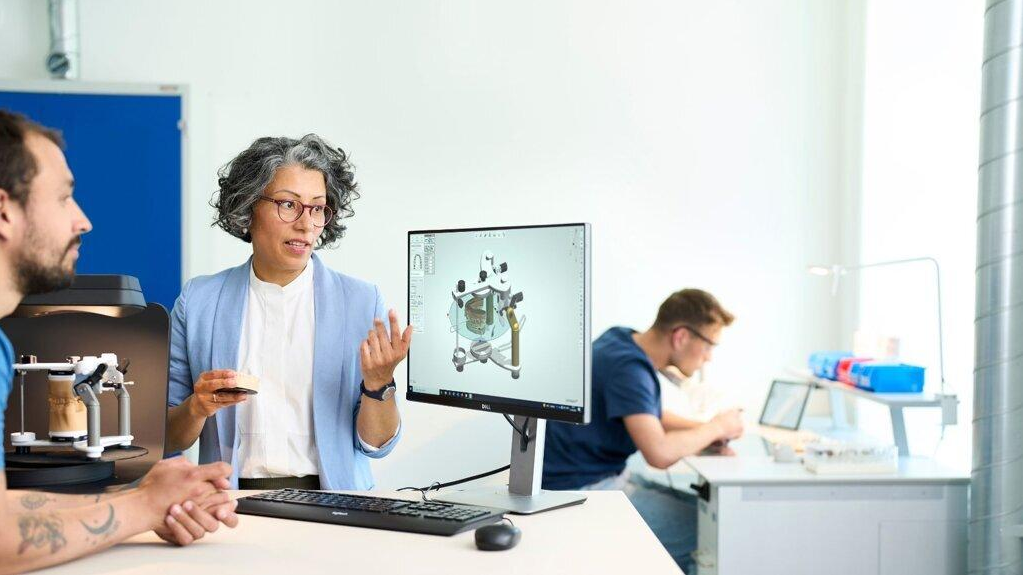
For many modern dental laboratories, workflow flexibility has become increasingly important.
As technologies evolve, laboratories may wish to:
An open workflow makes these upgrades easier because components can often be integrated without replacing the entire system.
This approach can help laboratories reduce long-term investment costs while maintaining access to new technologies.
Closed systems may still be beneficial in certain situations.
They are often suitable for:
For these users, the convenience of an integrated ecosystem may outweigh the limitations of reduced flexibility.
The trend in digital dentistry is moving toward greater interoperability and workflow integration. Laboratories increasingly seek solutions that allow them to combine scanners, CAD software, milling machines, 3D printers, and restorative materials based on their specific production requirements.
As competition grows and technology evolves rapidly, flexibility can become a significant advantage.
A workflow that supports future expansion helps laboratories remain competitive while avoiding unnecessary equipment replacement costs.
Both open and closed CAD/CAM workflows can deliver reliable results, but they serve different needs.
A closed system offers simplicity and a highly integrated experience, making it suitable for users seeking a straightforward digital workflow. An open system provides greater flexibility, broader compatibility, and easier scalability, making it an attractive choice for laboratories focused on long-term growth and operational efficiency.
Before investing in digital equipment, laboratories should evaluate not only current requirements but also future expansion plans. The right workflow is ultimately the one that supports your laboratory's goals today while providing room to grow tomorrow.

Dry & wet milling for zirconia, PMMA, wax with auto tool changer.
learn more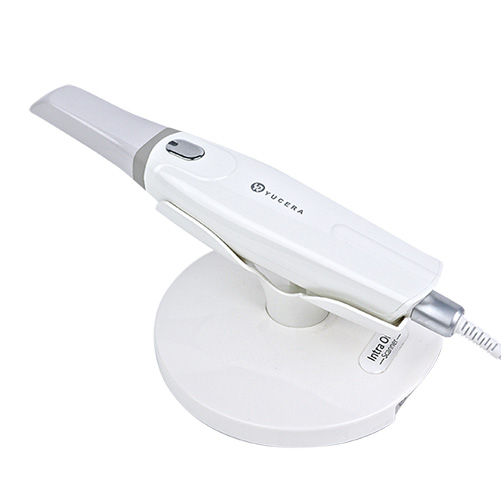
High-precision 3D scanning, AI calibration, full-arch accuracy.
learn more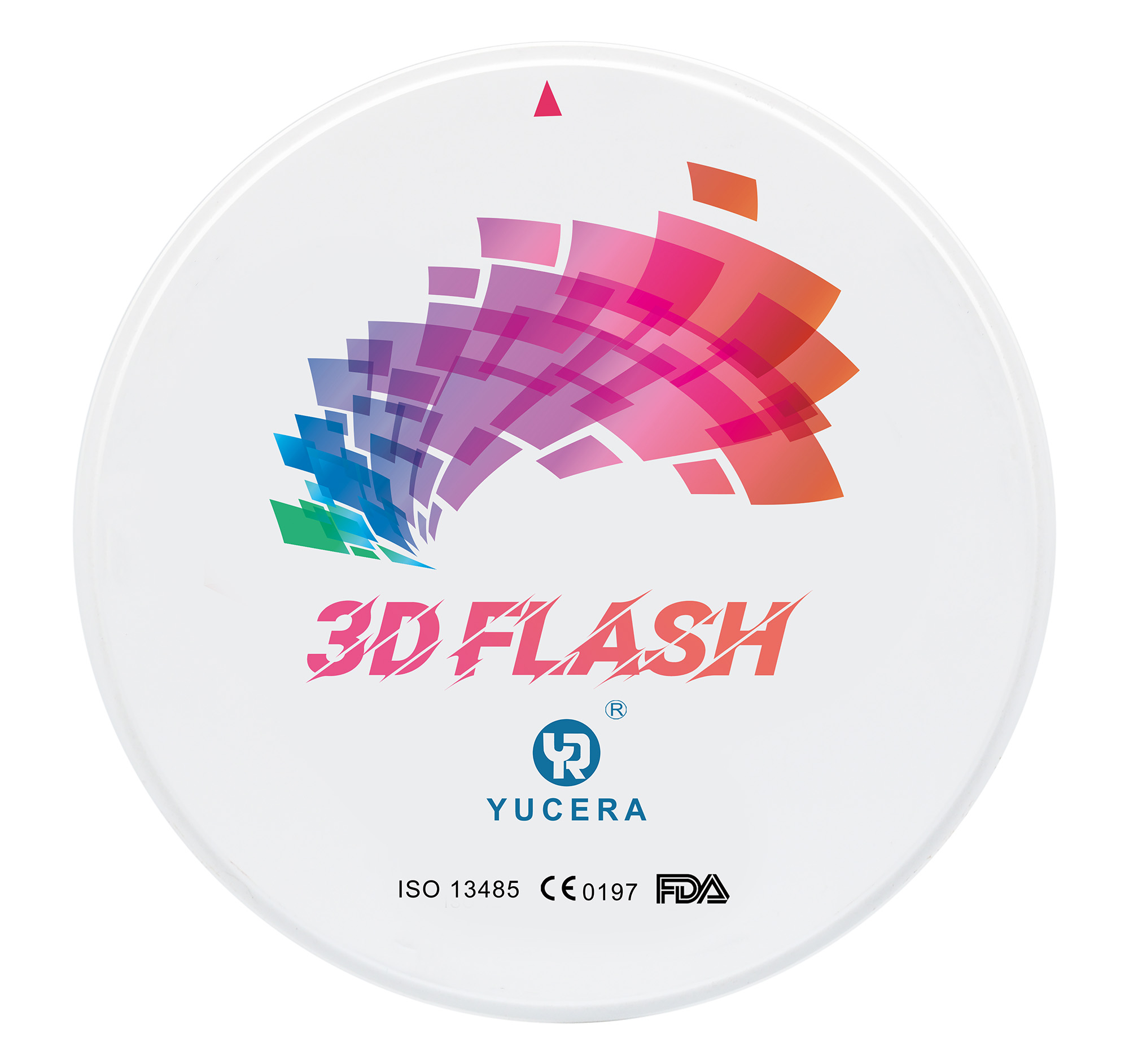
40-min full sintering with 57% incisal translucency and 1050 MPa strength.
learn more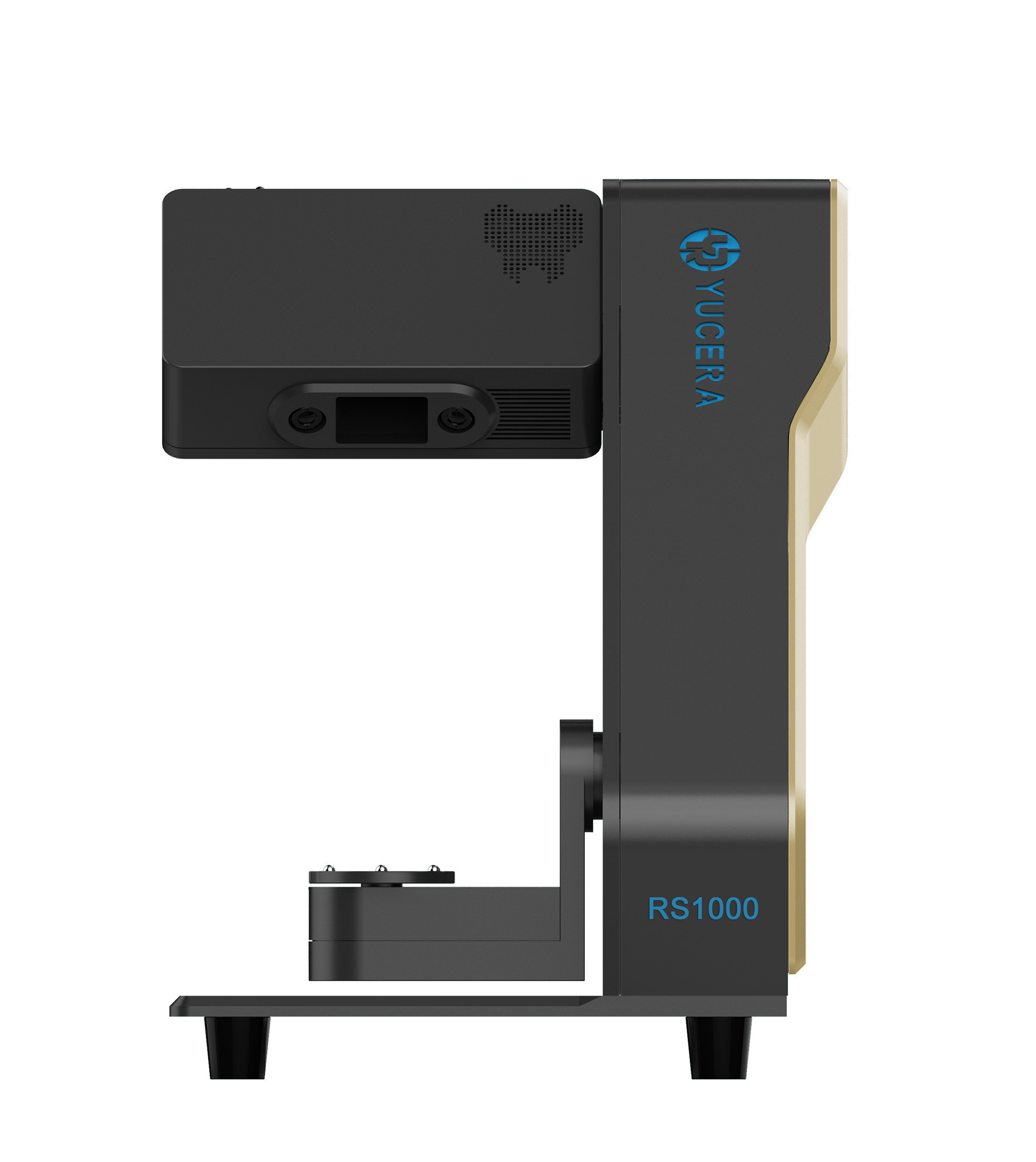
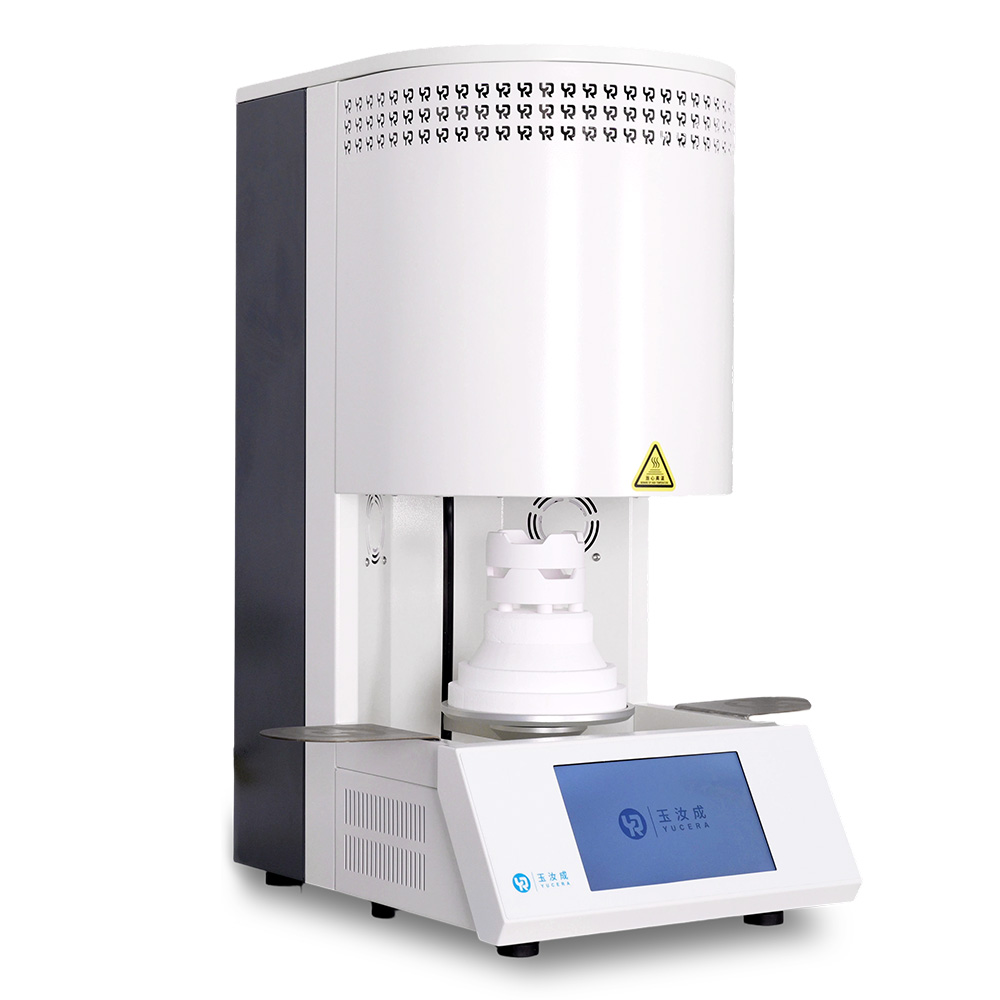
40-min cycle for 60 crowns, dual-layer crucible and 200°C/min heating.
learn more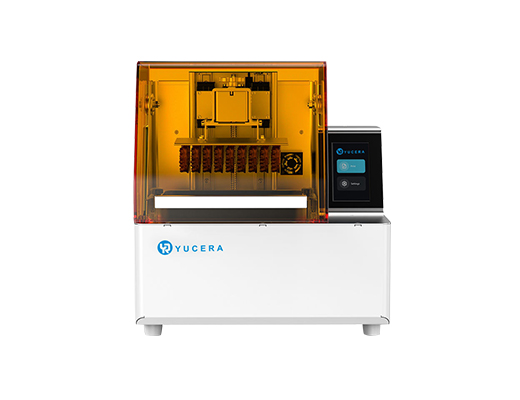
High-speed LCD printer for guides, temporaries, models with 8K resolution.
learn more


2026-03-13

2025-09-28
2026-07-03


