

 中 文
中 文
Digital Dentistry Workflow Optimization with CAD/CAM in 2025
2025-10-07
2026-09-16
Both the P100 and DJ89 PLUS are vat photopolymerization 3D printers designed for digital dentistry applications, including dental models, orthodontic models, implant models and surgical guides.
The two printers emphasize different performance characteristics:
Therefore, the P100 should not be described as superior to the DJ89 PLUS in every performance category. Its main improvements relate to application flexibility, material compatibility, workflow automation and integration into dental workstations.
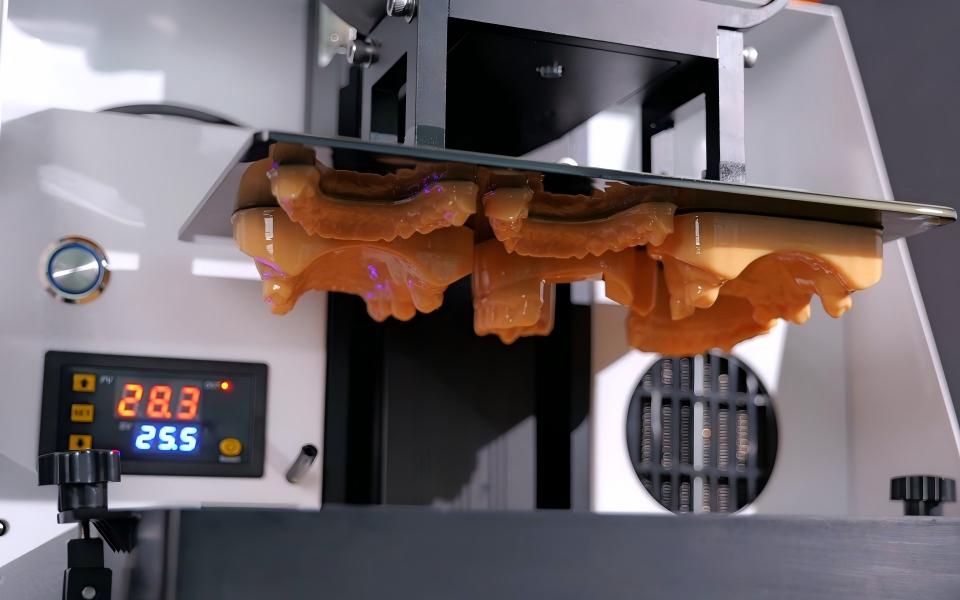
The P100 provides a build volume of:
223 × 126 × 150 mm
The DJ89 PLUS provides a build volume of:
228 × 128 × 100 mm
The X/Y build areas of the two printers are similar, but the P100 increases the Z-axis build height by 50 mm, representing an approximately 50% increase.
This extended vertical build capacity provides several practical advantages for dental clinics and laboratories:
Greater model placement flexibility
Taller dental models, implant models and surgical guides can be positioned more efficiently without excessive tilting or model segmentation.
More freedom in support design
Operators can select more suitable model orientations, which may reduce unnecessary supports and minimize support-related surface marks.
Broader application coverage
The increased build height is useful for dental models, orthodontic models, implant models and surgical guides with relatively tall geometries.
More flexible batch arrangement
Models with different heights can be arranged more efficiently within the same build, reducing the need to divide production into multiple jobs.
The recommended technical wording is:
Extended vertical build capacity with a 150 mm build height.
The P100 should not be described as having a significantly larger overall build platform. The more accurate claim is that it provides greater vertical build capacity.
The P100 supports:
385 nm and 405 nm resin compatibility
The latest DJ89 PLUS catalog primarily specifies:
405 nm photopolymer resin compatibility
Dental clinics and laboratories may use various types of photopolymer resins, including model resin, orthodontic model resin, surgical guide resin, temporary crown and bridge resin and denture-related resin. Different resins may require different curing wavelengths and process parameters.
The P100’s compatibility with both 385 nm and 405 nm materials provides the following benefits:
Greater resin selection flexibility
Users can select materials according to application requirements, cost, performance and supply availability.
Better integration with existing material systems
Laboratories already using 385 nm resins may continue using their existing materials without being restricted by the printer’s wavelength.
Easier transition between applications
Different dental applications can be matched with more suitable resin systems.
Reduced supply-chain dependency
Users have more alternatives if one type of resin becomes unavailable or difficult to source.
Recommended technical wording:
Broad compatibility with 385 nm and 405 nm dental photopolymer resins.
For regulatory and technical accuracy, wavelength compatibility should not be equated with clinical validation. A more precise statement is:
The P100 supports a broad range of 385 nm and 405 nm photopolymer resins, subject to material-specific validation.
The P100 supports:
Automatic resin loading and discharge
The latest DJ89 PLUS catalog specifies automatic resin feeding, but does not clearly specify automatic resin discharge.
For dental clinics, automated resin handling can reduce:
For dental laboratories, the main benefit is improved process standardization:
Reduced repetitive labor
Operators spend less time manually handling resin before and after each print job.
Lower risk of contamination and operating errors
Automated resin handling can reduce direct contact with resin and minimize incorrect filling levels.
Improved production continuity
Completed print jobs can be transitioned more efficiently to washing, post-curing and subsequent printing.
Reduced operator training requirements
Operators do not need to master as many manual resin-handling procedures.
Easier SOP implementation
Automated procedures are better suited to standardized operating procedures.
Recommended wording:
Automated resin loading and discharge reduce manual intervention and support a cleaner, more standardized dental production workflow.
This function does not mean that the printer can operate completely unattended. Resin condition, build-platform cleanliness, model orientation, support design and post-processing still require professional supervision.
The P100 supports:
USB, Ethernet and Wi-Fi connectivity
A digital dental workflow typically includes intraoral scanning, CAD design, slicing and 3D printing. Multiple connectivity options can simplify file transfer and reduce unnecessary manual operations.
For dental clinics, the P100 can:
For dental laboratories, flexible connectivity is beneficial for:
Recommended wording:
USB, Ethernet and Wi-Fi connectivity enable seamless integration into digital dental workflows.
This upgrade improves the printer’s integration with the overall digital workflow rather than directly improving print quality.
The P100 features:
Intelligent temperature control
The viscosity, flowability and curing behavior of photopolymer resin can be affected by ambient temperature. Temperature fluctuations may influence:
For dental clinics, intelligent temperature control can reduce the impact of seasonal or air-conditioning-related temperature variations.
For dental laboratories, it can help to:
Recommended wording:
Intelligent temperature control helps maintain stable printing conditions and improve process consistency.
“Intelligent temperature control” and “heated build chamber” should not be treated as identical terms. The P100 documentation refers to intelligent temperature control, while the latest DJ89 PLUS catalog specifies a heated build chamber with a temperature range of 20–45°C. The implementation and control logic may differ between the two systems.
The P100 has machine dimensions of:
365 × 365 × 490 mm
The DJ89 PLUS has machine dimensions of:
450 × 290 × 500 mm
The footprint areas of the two printers are similar. Therefore, it would not be technically accurate to simply claim that the P100 occupies less space.
A more precise description is:
Compact and well-proportioned design for dental workstation integration.
In a dental clinic or laboratory, the printer is normally used together with:
The P100 can be integrated into a workstation that combines printing, washing, post-processing and model organization. Proper workstation planning can reduce:
The key benefit is therefore workflow integration, rather than a substantially smaller footprint.
The P100 should not be promoted as having better performance in every category. Based on the available product materials, the DJ89 PLUS retains advantages in the following areas:
The more accurate product positioning is:
P100 is a more versatile and workflow-oriented dental 3D printing solution, while the DJ89 PLUS is optimized for high-speed and high-throughput production.
Compared with the DJ89 PLUS, the P100 provides improvements in six main areas:
The main value of the P100 for dental clinics and laboratories is not the pursuit of a single maximum specification. Instead, it provides:
Greater material flexibility, more vertical build capacity and a more standardized operating workflow across a wide range of dental applications.

Dry & wet milling for zirconia, PMMA, wax with auto tool changer.
learn more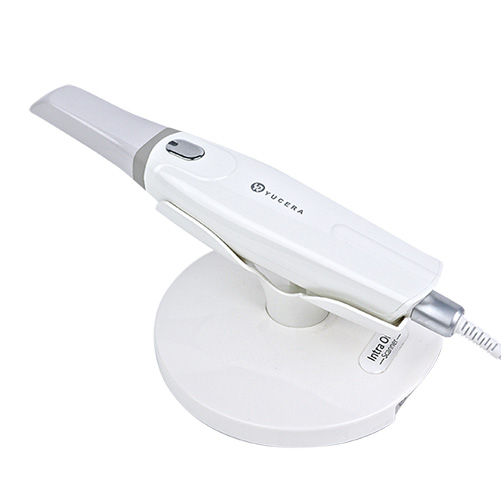
High-precision 3D scanning, AI calibration, full-arch accuracy.
learn more
40-min full sintering with 57% incisal translucency and 1050 MPa strength.
learn more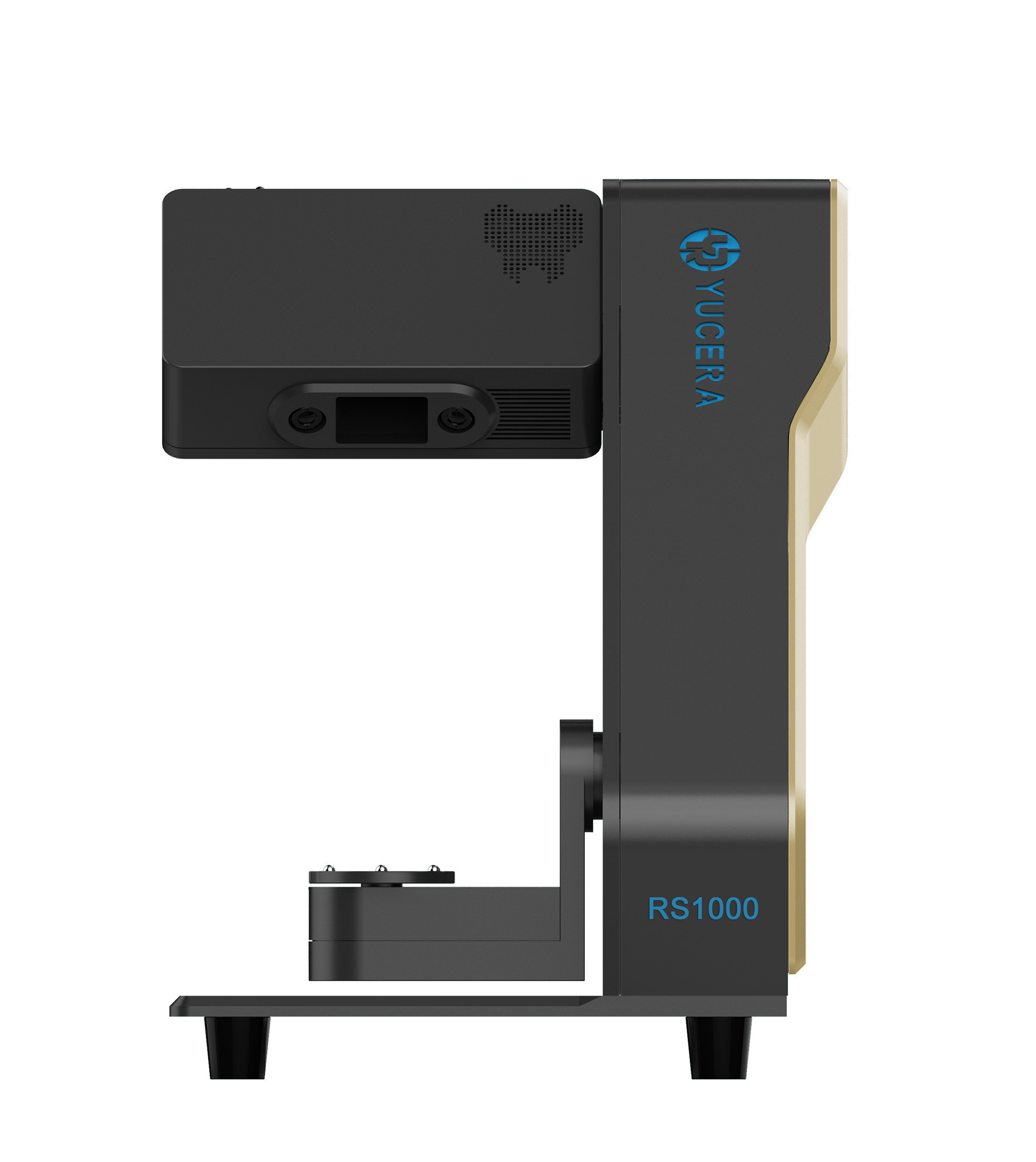
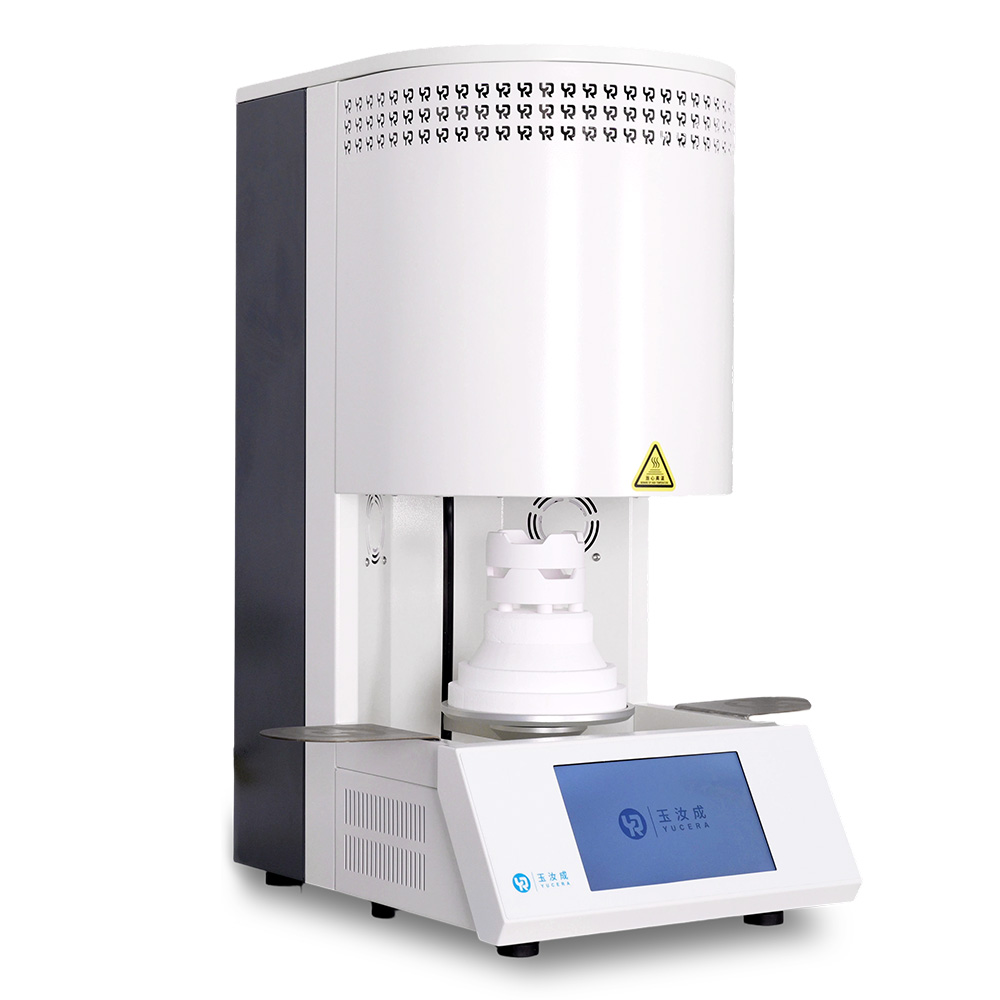
40-min cycle for 60 crowns, dual-layer crucible and 200°C/min heating.
learn more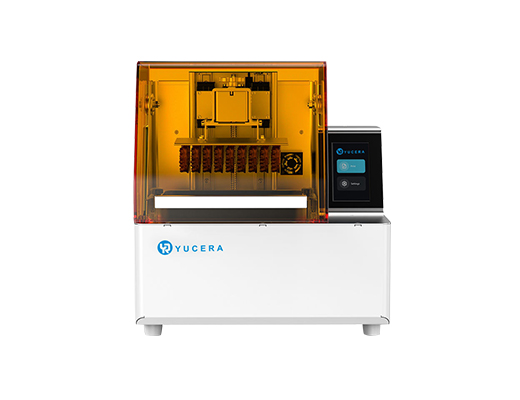
High-speed LCD printer for guides, temporaries, models with 8K resolution.
learn more