


 中 文


Benefits of Zirconium Dioxide All-Ceramic Teeth
2024-10-16
2026-10-30
Uniform shrinkage is one of the most important requirements in dental zirconia manufacturing. During sintering, zirconia undergoes densification as internal pores gradually disappear. However, if the green body has uneven density before sintering, different areas may shrink at different rates, potentially causing dimensional deviations, warping, or internal defects.
So, how do manufacturers ensure uniform density throughout a zirconia blank?
The answer lies in several interconnected production processes, including powder preparation, spray granulation, molding, pressure control, and debinding.
Green density refers to the density of a compacted zirconia body before sintering.
It reflects how closely zirconia particles are packed together and how much pore space remains between them.
When green density is relatively uniform, different regions of the zirconia blank have more consistent initial packing conditions. This helps promote more uniform densification and shrinkage during sintering.
In contrast, uneven green density can lead to different local shrinkage rates.
For example:
Higher-density areas generally have fewer initial pores.
Lower-density areas contain more pore space and may require greater densification.
Differences in local densification can generate internal stresses and dimensional inconsistencies.
Therefore, achieving uniform green density is an essential step in controlling the dimensional accuracy of dental zirconia restorations.
The first step toward uniform density begins with the zirconia powder itself.
Before forming, manufacturers need to control several powder characteristics:
Particle size distribution
A suitable particle size distribution helps achieve consistent particle packing. Significant variations in particle size can affect how particles rearrange during compaction.
Particle morphology
Particle shape influences flowability and packing behavior. Irregular particles may create more resistance during rearrangement.
Agglomeration control
Fine zirconia particles naturally tend to form agglomerates. Hard agglomerates may not break down uniformly during pressing, potentially creating localized density differences.
Moisture content
Moisture influences particle interactions, granulation behavior, and powder flowability. Excessive or insufficient moisture can affect the consistency of the forming process.
By controlling these characteristics, manufacturers establish a more consistent starting point for subsequent production stages.
Fine zirconia powder does not always flow easily into a forming mold. Its small particle size and tendency to agglomerate can make uniform mold filling difficult.
To improve this behavior, manufacturers commonly use spray drying and granulation.
During this process, a zirconia slurry is atomized into small droplets. As the liquid evaporates, the droplets form granulated powder particles.
Properly prepared granules should have:
A relatively controlled particle size distribution
Good flowability
Appropriate moisture content
Consistent internal structure
Suitable compressibility under pressure
These characteristics help the powder flow more consistently into the mold and reduce the risk of uneven filling.
Granule properties also influence how particles rearrange and deform during pressing. Therefore, spray granulation is an important link between powder preparation and green body density.
Even when the powder has good flowability, the pressing process can still create density variations.
During uniaxial pressing, pressure is primarily applied along one direction. Friction between the powder and mold walls can cause pressure transmission to become uneven throughout the compact.
As a result, different regions may experience different levels of compaction.
This can create a density gradient within the green body.
To minimize this problem, manufacturers need to optimize:
Mold design
Proper mold geometry helps promote uniform powder distribution and reduces filling inconsistencies.
Filling consistency
The amount and distribution of powder entering the mold should remain consistent between production cycles.
Pressing parameters
Pressure, pressing speed, holding time, and the pressing sequence should be controlled to achieve repeatable compaction.
Isostatic pressing
Cold isostatic pressing (CIP) can be used to apply pressure more uniformly from multiple directions. Compared with conventional uniaxial pressing, it can help reduce density gradients in suitable forming processes.
However, the effectiveness of any pressing method depends on powder characteristics, mold design, and process parameters.
It may seem logical that increasing pressing pressure would always improve green density. In practice, the relationship is more complicated.
If the pressure is insufficient, particles may not rearrange adequately, leaving excessive voids between them.
On the other hand, excessive or poorly controlled pressure may cause problems such as:
Nonuniform granule deformation
Localized stress concentrations
Density variations caused by friction or filling differences
Cracks or defects during compaction and subsequent handling
The goal is not simply to achieve the highest possible pressure.
Instead, manufacturers need to establish a stable and repeatable pressing window based on powder characteristics and product requirements.
Consistent forming conditions are essential for producing zirconia blanks with predictable density distribution.
Some zirconia forming processes use organic binders to improve green body strength and handling characteristics.
After pressing, these organic components must be removed through debinding before or during the appropriate thermal processing stage.
If debinding is not properly controlled, the decomposition of organic materials may generate gases faster than they can escape from the compact.
Potential consequences include:
Internal pores
Cracks
Localized defects
Structural damage to the green body
To reduce these risks, manufacturers need to optimize heating rates, holding times, and gas removal conditions.
The debinding process should allow organic materials to decompose and escape gradually without damaging the zirconia structure.
This helps preserve the integrity of the compact before final sintering.
Process control alone is not sufficient. Density uniformity should also be verified through appropriate quality inspections.
Common evaluation methods include:
Bulk green density measurement
The mass and external volume of a green body can be used to calculate its average density.
Regional density comparison
Samples taken from different positions can be evaluated to identify potential density variations.
Porosity evaluation
Porosity measurements help assess the internal packing condition and identify areas with excessive voids.
Dimensional inspection
Measurements of the green body's dimensions and weight help monitor consistency between production batches.
It is important to distinguish between average density and density distribution. A zirconia blank may have an acceptable average density while still containing localized regions with different densities.
Therefore, evaluating density uniformity requires more than a single overall density measurement.
Once the green body has been properly prepared, it enters the sintering stage.
As temperature increases, zirconia particles undergo diffusion and gradually form stronger connections. Pores between particles shrink, and the material becomes denser.
When the initial green density is relatively uniform, different regions are more likely to undergo similar densification behavior under properly controlled sintering conditions.
However, uniform green density alone does not guarantee identical shrinkage.
Other factors also contribute, including:
Powder composition and particle characteristics
Initial porosity and pore distribution
Sintering temperature and holding time
Heating and cooling rates
Material composition and microstructure
This is why dimensional accuracy in dental zirconia production requires coordinated control of both forming and sintering processes.
Uniform shrinkage in dental zirconia production begins long before the material enters the sintering furnace.
It starts with consistent powder characteristics, continues through spray granulation and controlled pressing, and depends on proper debinding and quality inspection.
The central principle is straightforward: a more uniform green density provides a more consistent starting condition for sintering densification.
By controlling each production stage, manufacturers can reduce density variations, improve dimensional consistency, and establish a more predictable foundation for producing precision dental zirconia restorations.

Dry & wet milling for zirconia, PMMA, wax with auto tool changer.
learn more
High-precision 3D scanning, AI calibration, full-arch accuracy.
learn more
40-min full sintering with 57% incisal translucency and 1050 MPa strength.
learn more
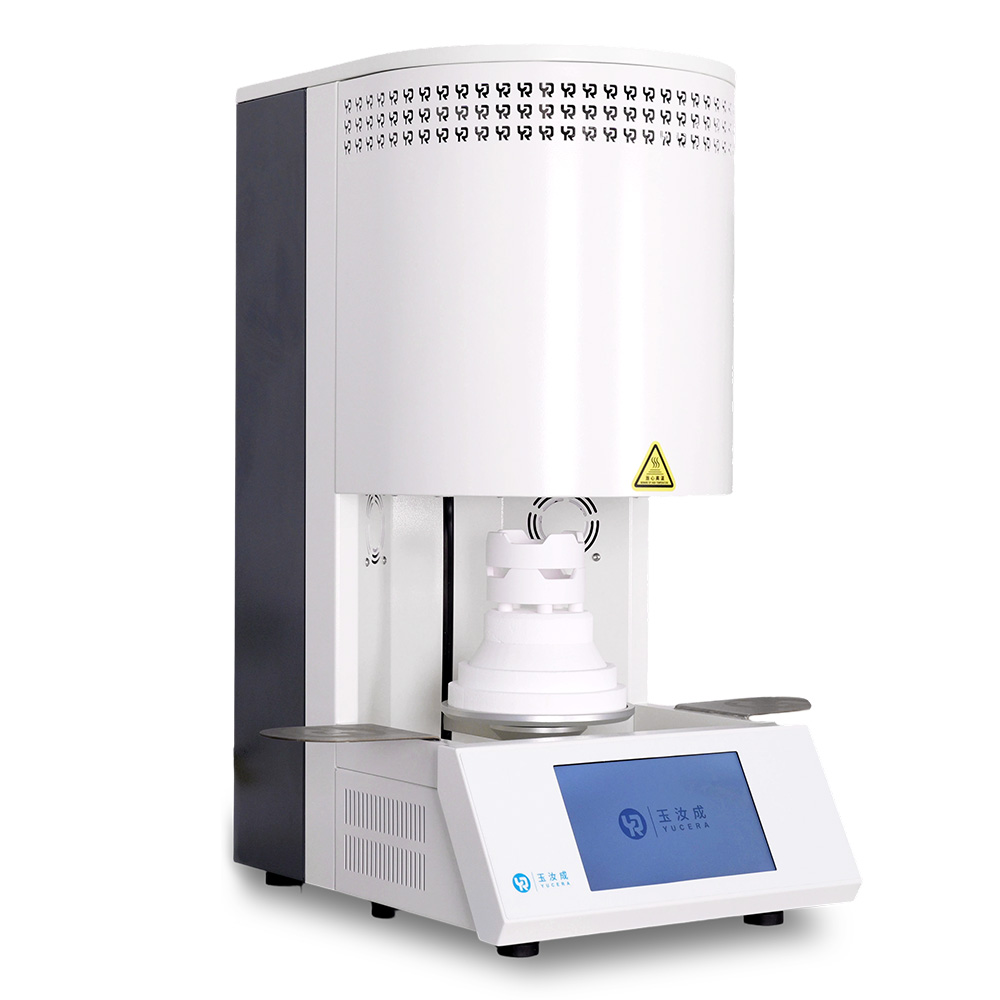
40-min cycle for 60 crowns, dual-layer crucible and 200°C/min heating.
learn more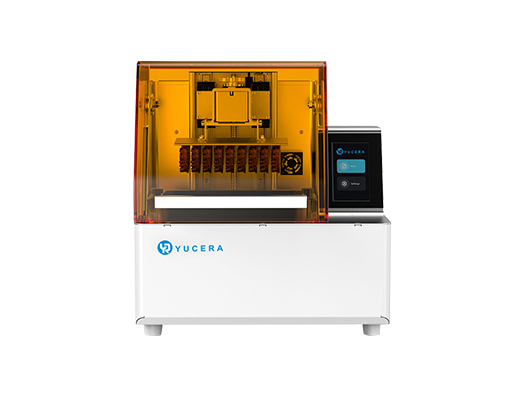
High-speed LCD printer for guides, temporaries, models with 8K resolution.
learn more