

 中 文


Eastern European Dental Labs: Best Practices for Zirconia Milling with CAD/CAM Systems 2026 – Poland, Hungary, Romania
2026-02-10
2026-11-04
Zirconia has become one of the most widely used materials in modern digital dentistry. From single crowns, veneers, and inlays to multi-unit bridges and full-arch restorations, different types of zirconia are designed to meet different clinical and laboratory requirements.
However, not every zirconia material is suitable for every type of restoration.
Some zirconia materials offer higher flexural strength, making them suitable for posterior restorations and certain multi-unit bridges. Others provide higher translucency and more natural color transitions, making them attractive options for anterior aesthetic restorations. Multilayer zirconia also offers different levels of color and translucency across the blank.
So, how should dental laboratories choose the right zirconia for different restorations?
This guide explains the relationship between zirconia parameters and restoration types, using YUCERA zirconia products as practical examples.
Before selecting zirconia, it is important to understand the material properties that influence its applications.
Flexural strength is an important mechanical property of dental zirconia, measured in megapascals (MPa).
It describes a material's ability to withstand bending stress before fracture. Different zirconia formulations offer different strength levels, which influence their recommended applications.
As a general reference:
1000–1200 MPa: Higher-strength zirconia, commonly considered for posterior crowns and bridges within the manufacturer's indicated span.
700–900 MPa: Zirconia that can balance mechanical performance and aesthetic requirements for selected restorations.
Around 600 MPa: Often designed for aesthetic applications, including veneers, inlays, onlays, and selected anterior restorations.
These ranges are general selection references rather than universal clinical rules. Restoration thickness, connector dimensions, span length, occlusal loading, and product-specific instructions must also be considered.
Translucency affects how light passes through a zirconia restoration. It is particularly important for anterior restorations, where natural-looking optical properties are often required.
Higher translucency can contribute to a more natural appearance. However, translucency alone does not determine aesthetic quality. Shade, restoration thickness, substrate color, surface treatment, and sintering conditions also influence the final result.
Typical translucency ranges include:
40%–43%: Relatively lower translucency, often selected when masking ability and mechanical performance are important.
46%–49%: A balance between translucency and masking characteristics for selected restorations.
43%–57%: A wider translucency range that can provide different aesthetic effects across multilayer materials.
Translucency values should be interpreted according to the manufacturer's testing method, as results from different measurement methods may not be directly comparable.
Zirconia can also be classified according to its color structure and production process.
White Zirconia
White zirconia requires additional coloring procedures when a customized shade is needed. It gives dental technicians flexibility in adjusting the final restoration color.
Colored Zirconia
Colored zirconia incorporates color during material production. It can reduce some post-milling coloring procedures and simplify the laboratory workflow.
Multilayer Zirconia
Multilayer zirconia features different color or translucency zones within one blank. These transitions help reproduce the natural color characteristics of teeth, from the incisal area to the cervical region.
However, multilayer structures vary in layer count, gradient design, and mechanical properties. The presence of multiple layers does not automatically indicate suitability for every restoration type.
Understanding material properties is only the first step. The next step is matching them with specific restoration requirements.
Veneers, inlays, and onlays require careful consideration of restoration thickness, marginal accuracy, optical properties, and bonding conditions.
For these restorations, translucency and shade matching are important, but the material must also be specifically indicated for the intended application.
YUCERA options include:
UT Multilayer: With approximately 600 MPa flexural strength and 49% translucency, it is designed for veneers, inlays, onlays, and selected anterior restorations within its indicated applications.
UT White: Suitable for veneers, inlays, and onlays according to its product indications.
ST Multilayer: Can be used for veneers, inlays, and onlays within the specified indications.
3D Plus: Also covers veneers, inlays, and onlays in its recommended application range.
Thin restorations require particular attention to preparation design, minimum material thickness, and bonding protocols. Flexural strength and translucency alone are not sufficient for material selection.
Anterior restorations must balance mechanical requirements with aesthetic performance.
Natural teeth have varying shades and translucency from the cervical region to the incisal edge. Zirconia with suitable color and translucency gradients can help reproduce these characteristics.
Recommended YUCERA options include:
3D Plus: Offers 43%–57% translucency and 700–1050 MPa flexural strength, making it suitable for anterior crowns and selected short-span bridges.
ST Color: Provides approximately 1100 MPa flexural strength and 43% translucency for anterior crowns and bridges within its indicated applications.
ST Multilayer: Combines approximately 1100 MPa flexural strength with a multilayer structure for selected anterior restorations.
SHT Multilayer: Offers approximately 900 MPa flexural strength and 46% translucency for indicated anterior crowns and bridges.
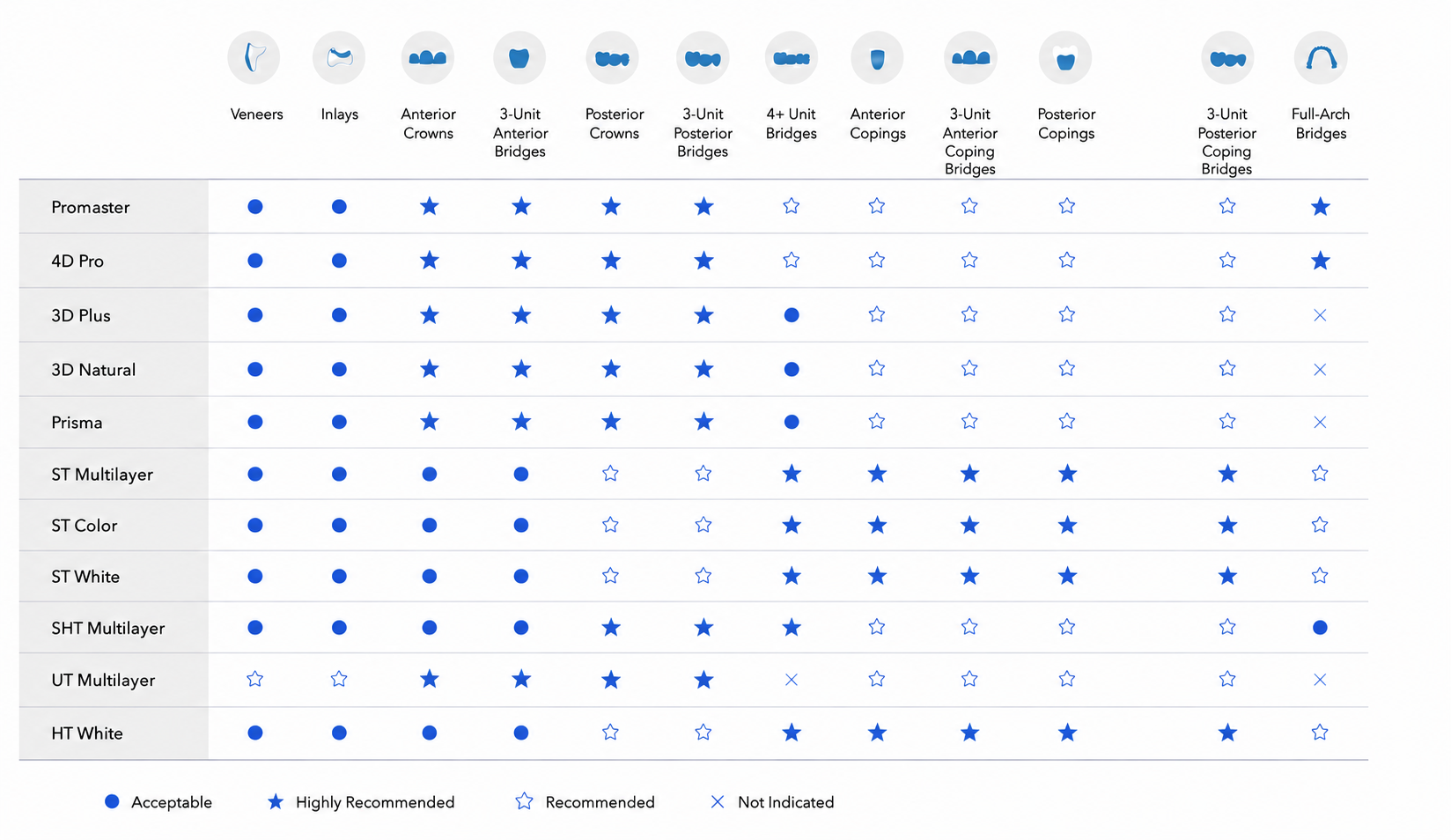
ProMaster and 4D Pro: Both cover anterior crowns and short-span bridges in the YUCERA indication matrix.
For anterior restorations, the highest translucency is not necessarily the best choice. Substrate color, restoration thickness, shade matching, and the final optical result should all be evaluated.
Posterior restorations are exposed to substantial occlusal forces. Therefore, flexural strength, restoration thickness, and connector design are important factors.
YUCERA products to consider include:
HT White: Approximately 1200 MPa flexural strength and 40% translucency. Suitable for posterior crowns and bridges within the product's indications.
ST White: Approximately 1200 MPa flexural strength and 43% translucency. Suitable for crowns, inlays, onlays, and indicated bridges.
ST Color: Approximately 1100 MPa flexural strength, suitable for anterior and posterior crowns and selected bridges.
ST Multilayer: Approximately 1100 MPa flexural strength, offering mechanical performance alongside color gradients.
SHT Multilayer: Approximately 900 MPa flexural strength, suitable for posterior restorations covered by its indication chart.
3D Plus: Offers 700–1050 MPa flexural strength and can be selected for posterior crowns and bridges according to the relevant layer and restoration design.
For longer bridges, material strength should never be the only selection criterion. Connector cross-sectional area, connector height, bridge span, and occlusal load distribution must also be evaluated.
Long-span bridges and full-arch restorations involve more complex structural requirements than single crowns.
These restorations have longer spans and multiple connecting areas. Therefore, overall material performance, connector design, milling strategy, and sintering deformation control are particularly important.
According to the YUCERA product indication matrix:
ProMaster: Highly recommended for full-arch bridges and also covers various crown and short-span bridge applications.
4D Pro: Highly recommended for full-arch bridges and selected crown and short-span bridge applications.
SHT Multilayer: Covers full-arch applications in the indication matrix and is recommended for selected multi-unit bridges.
3D Plus: Suitable for selected multi-unit bridges but not indicated for full-arch bridges.
3D Natural and Prisma: Cover selected multi-unit bridge applications, subject to their individual product specifications.
For implant-supported full-arch restorations, additional considerations include implant distribution, occlusal design, overall framework structure, and connector dimensions.
A high flexural strength value alone does not guarantee that a zirconia material is suitable for every full-arch restoration.
The following table summarizes the main parameters and applications of selected YUCERA zirconia products.
| Product | Flexural Strength | Translucency | Main Applications |
|---|---|---|---|
| HT White | 1200 MPa | 40% | Posterior crowns and bridges |
| ST White | 1200 MPa | 43% | Crowns, inlays, onlays, short-span bridges |
| UT White | 600 MPa | 49% | Veneers, inlays, onlays |
| ST Color | 1100 MPa | 43% | Anterior/posterior crowns and selected bridges |
| SHT Multilayer | 900 MPa | 46% | Crowns, multi-unit bridges, indicated full-arch applications |
| UT Multilayer | 600 MPa | 49% | Veneers, inlays, onlays, anterior restorations |
| ST Multilayer | 1100 MPa | 43% | Crowns, short-span bridges, selected multi-unit restorations |
| 3D Plus | 700–1050 MPa | 43%–57% | Crowns, bridges, anterior restorations |
YUCERA's product indication matrix also includes ProMaster, 4D Pro, 3D Natural, and Prisma for specific restoration types.
This table is intended as a quick selection reference. Always check the detailed product indication chart and instructions for use before selecting a material, particularly for multilayer zirconia, where mechanical properties can vary between layers.
Choosing zirconia involves more than comparing strength and translucency. Dental laboratories should also consider their restoration types and production workflows.
Step 1: Identify the Restoration Type
Determine whether the restoration is a single crown, veneer, inlay, short-span bridge, long-span bridge, or full-arch restoration.
Each restoration has different structural and functional requirements.
Step 2: Evaluate Mechanical Requirements
Consider the restoration span, connector design, material thickness, and expected occlusal loading.
For multi-unit and full-arch restorations, prioritize products with clearly indicated applications.
Step 3: Consider Aesthetic Requirements
For anterior restorations, evaluate translucency, color gradients, and substrate color.
For posterior restorations, consider mechanical strength, masking requirements, and available restoration thickness.
Step 4: Consider Laboratory Workflow
White, colored, and multilayer zirconia involve different processing procedures.
White zirconia may require additional coloring steps. Colored zirconia can reduce some post-milling coloring procedures, while multilayer zirconia provides built-in color transitions.
Laboratories should select products according to their milling equipment, coloring techniques, sintering programs, and production requirements.
Different zirconia parameters are associated with different dental restoration applications.
Higher-strength zirconia is generally considered for posterior and multi-unit restorations that require greater mechanical performance. More translucent zirconia can be suitable for selected anterior aesthetic applications, while multilayer zirconia provides color and translucency transitions for a range of crowns and bridges.
For dental laboratories, the best zirconia is not necessarily the material with the highest flexural strength or translucency. It is the material that meets the mechanical, aesthetic, structural, and processing requirements of the intended restoration.

Dry & wet milling for zirconia, PMMA, wax with auto tool changer.
learn more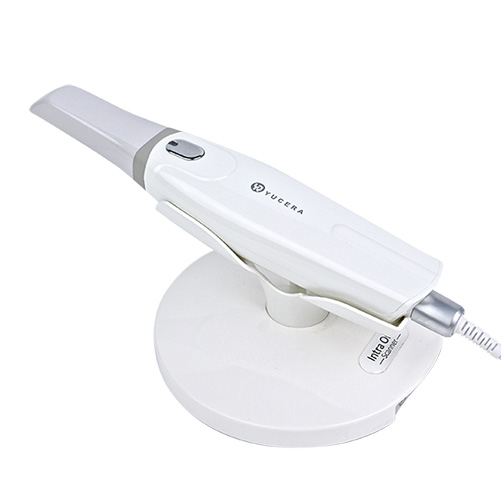
High-precision 3D scanning, AI calibration, full-arch accuracy.
learn more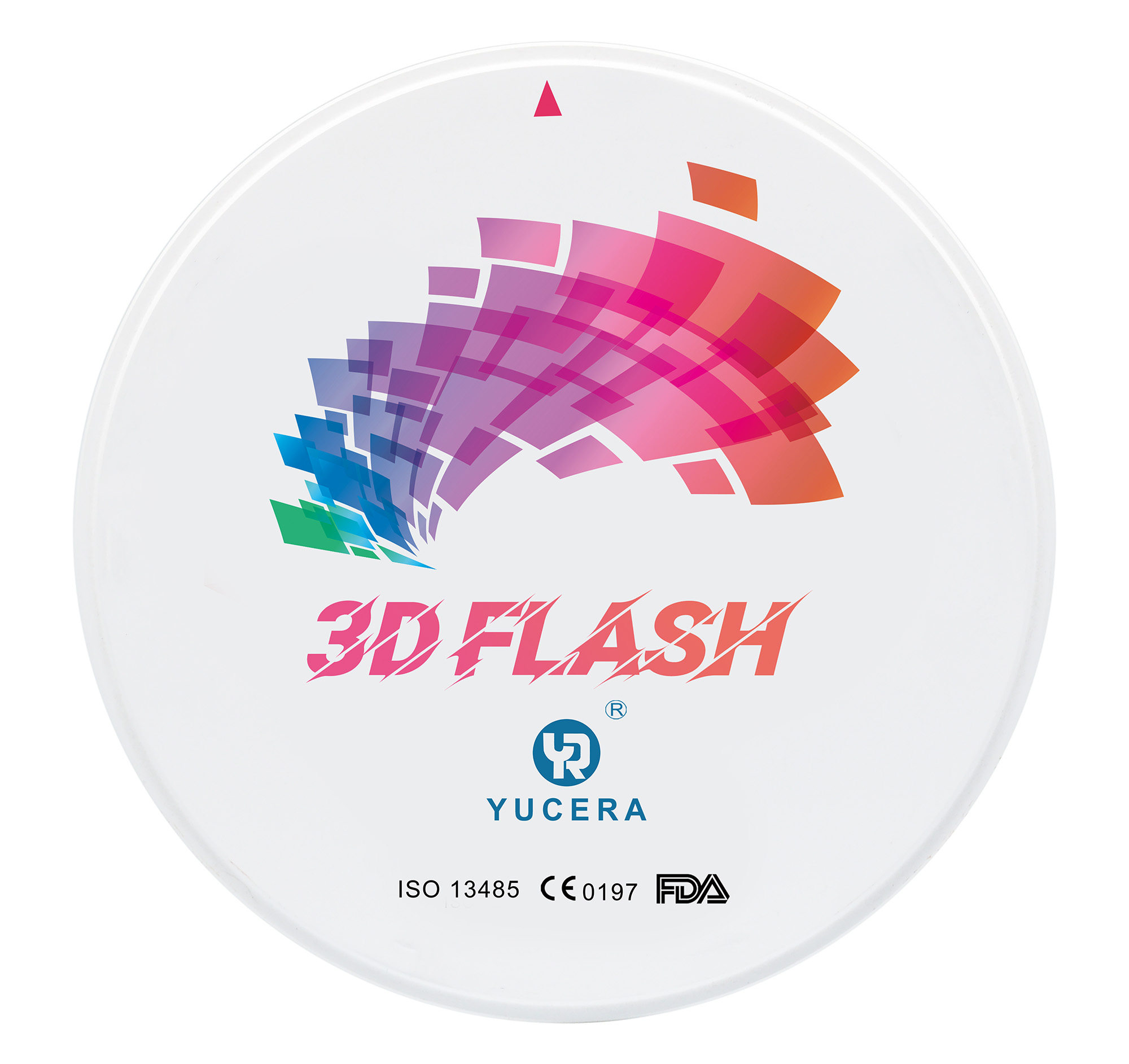
40-min full sintering with 57% incisal translucency and 1050 MPa strength.
learn more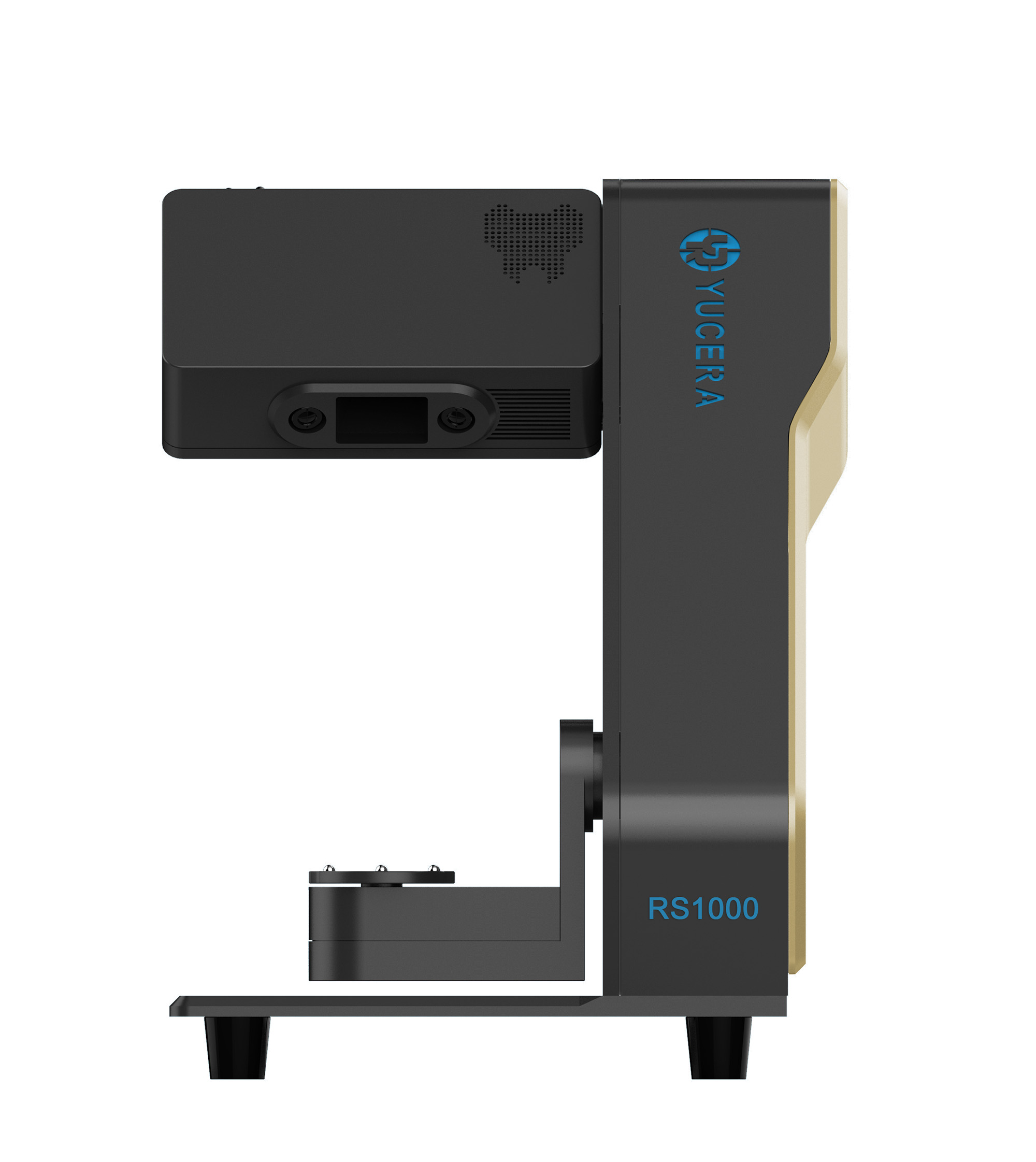
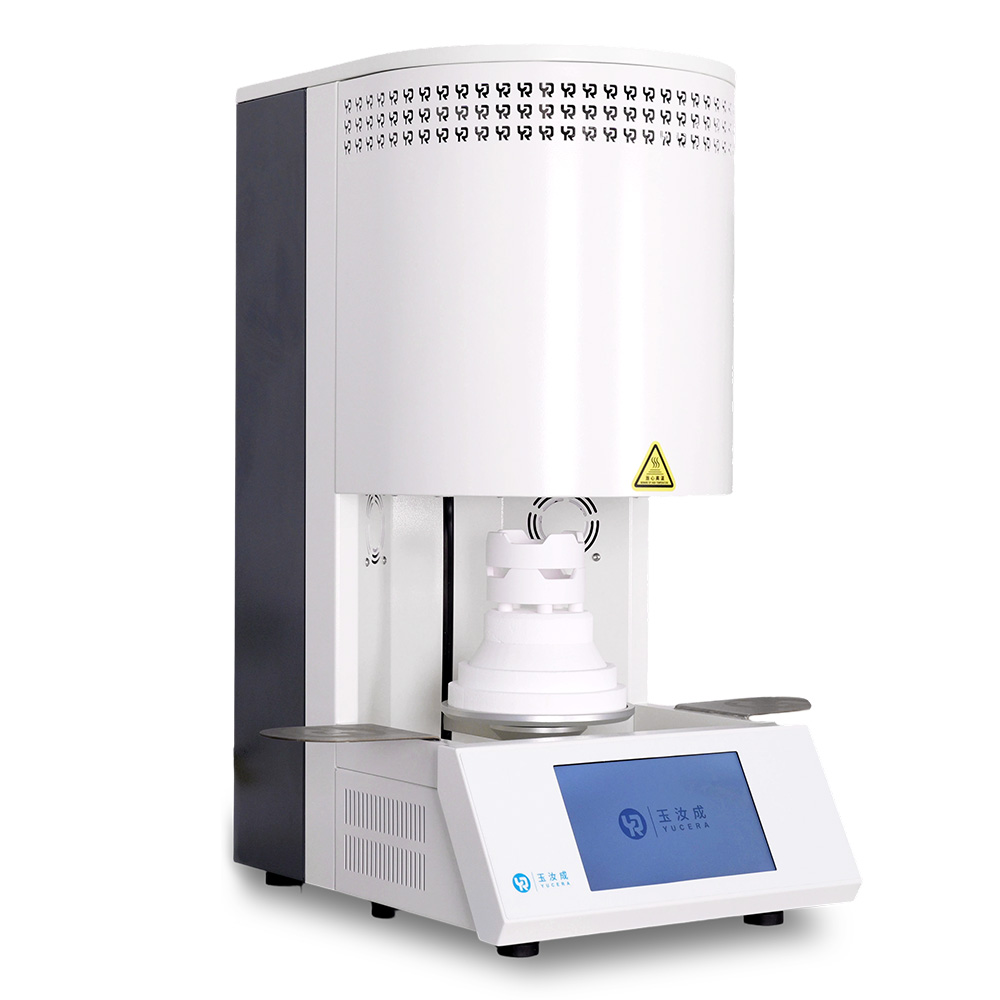
40-min cycle for 60 crowns, dual-layer crucible and 200°C/min heating.
learn more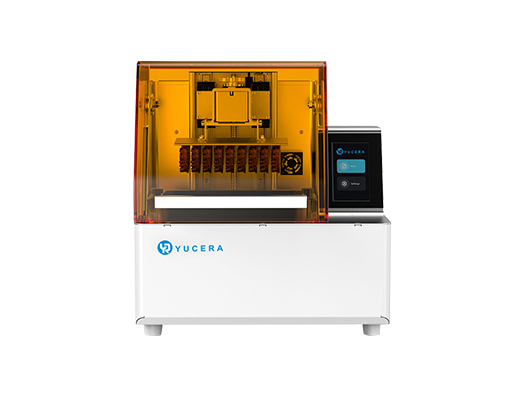
High-speed LCD printer for guides, temporaries, models with 8K resolution.
learn more