



 中 文

2026 Resin 3D Printing Permanent Restoration Era: Nano-Composite Resins Now Approaching Zirconia Strength for Chairside Crowns & Bridges
2026-04-02
2026-10-26
White, pre-shaded, and multilayer zirconia are all widely used for dental restorations, but they are not manufactured in exactly the same way.
From the outside, the difference may appear to be mainly about color. In reality, the manufacturing process can differ at several stages, including powder preparation, coloring, material distribution, pressing, pre-sintering, and final sintering.
Understanding these differences helps dental technicians better understand how zirconia blocks are produced and why different types require different approaches during CAD/CAM processing.
White zirconia can be considered the basic form of zirconia blank production.
The general manufacturing process includes:
Zirconia powder → Mixing → Granulation → Compaction → Pre-sintering → Machining
At this stage, the primary goal is to obtain a zirconia block with consistent composition, density, and mechanical properties.
Important factors include:
Powder purity
Particle size distribution
Stabilizer content
Powder mixing uniformity
Green density
Pre-sintered strength
Final sintered density and microstructure
Because the material itself does not contain a predetermined tooth-color gradient, the final restoration can be colored later by the dental technician.
For example, a technician may use a coloring liquid to achieve the desired shade before sintering.
Therefore, the main manufacturing challenge for white zirconia is material uniformity rather than built-in color distribution.
Pre-shaded zirconia follows a different approach.
Instead of starting with a completely white zirconia blank and adding color later, the coloring system is introduced during material preparation.
A simplified process can be represented as:
Zirconia powder + Coloring components → Mixing → Granulation → Compaction → Pre-sintering → Pre-shaded zirconia blank
The coloring components can contain different metal oxides or other coloring systems designed to produce specific dental shades.
The key requirement is uniform dispersion.
If the coloring components are not evenly distributed throughout the powder, the final zirconia restoration may show unwanted color variation after sintering.
This means manufacturers need to control several additional factors:
Type of coloring components
Concentration of coloring components
Particle size
Powder dispersion
Mixing uniformity
Moisture and processing conditions
Distribution throughout the zirconia blank
The important point is that pre-shaded zirconia is not simply "painted" on the surface.
The color is incorporated into the material during manufacturing, allowing the resulting restoration to have a predetermined shade after sintering.
The main advantage is workflow simplification.
With white zirconia, coloring is normally performed during laboratory processing. With pre-shaded zirconia, the basic shade is already incorporated into the blank.
This can reduce the need for conventional pre-sintering staining and make the workflow more predictable for technicians.
However, the final appearance can still depend on restoration thickness, sintering conditions, surface treatment, and any additional characterization.
Multilayer zirconia takes the concept one step further.
Instead of producing a blank with one relatively uniform shade, manufacturers create different regions within the same zirconia block.
A simplified structure might look like:
Incisal region → Transition region → Dentin region → Cervical region
The exact number and design of layers vary between products.
The differences between layers can be created by changing factors such as:
Coloring concentration
Zirconia powder composition
Stabilizer content
Optical properties
Powder ratios
Material characteristics
As a result, different areas of the same block can have different optical or material properties.
This is why multilayer zirconia should not simply be understood as "several colors stacked together."
In some formulations, the manufacturer may control not only shade but also translucency or other material characteristics across the block.
The manufacturing challenge therefore becomes much more complex:
The manufacturer must control not only what the material is, but also where each material characteristic is located within the block.
The manufacturing differences become especially important when multilayer zirconia is used in a dental laboratory.
With a relatively uniform white or pre-shaded block, the position of a restoration inside the blank has less influence on the basic shade distribution.
With multilayer zirconia, however, the vertical position of the restoration can determine which layers are included in the final restoration.
For example, if the incisal portion of a crown is positioned too low or too high, the restoration may contain a different proportion of the transition or dentin layers than intended.
Therefore, technicians need to consider:
Restoration height
Blank thickness
Layer position
Insertion direction
Nesting position
Margin location
Final restoration thickness
This is one reason why multilayer zirconia requires more attention during CAD/CAM nesting.
The goal is not simply to fit as many restorations as possible into one blank. The restorations also need to be positioned appropriately within the designed material gradient.
The three types can be summarized as follows:
| Manufacturing Factor | White Zirconia | Pre-Shaded Zirconia | Multilayer Zirconia |
|---|---|---|---|
| Basic zirconia powder | ✓ | ✓ | ✓ |
| Built-in coloring | Usually no | ✓ | ✓ |
| Uniform color distribution | ✓ | ✓ | — |
| Color gradient | — | Usually no | ✓ |
| Different material regions | Usually no | Usually no | ✓* |
| Powder mixing requirements | Standard | Higher | Higher |
| Layer positioning control | Not required | Usually not required | Important |
| Laboratory staining | Commonly used | Reduced or optional | Usually reduced or optional |
| CAD/CAM nesting considerations | Standard | Standard | More critical |
*The exact design depends on the formulation of the multilayer zirconia.
The progression from white to pre-shaded to multilayer zirconia can be understood as an increase in manufacturing variables.
The main objective is:
Control the material.
Manufacturers focus on powder characteristics, composition, density, and sintering behavior.
The objective becomes:
Control the material + control the color.
The coloring system must be distributed consistently throughout the zirconia.
The objective becomes:
Control the material + control the color + control the spatial distribution.
The manufacturer needs to ensure that the intended layers are formed at the correct positions and that the transition between layers is consistent.
This makes multilayer zirconia manufacturing more demanding because small variations in powder distribution or layer formation can affect the final optical result.
Although the zirconia blank determines the basic material and optical characteristics, the final restoration is also affected by subsequent processing.
Factors such as:
CAD design
Restoration thickness
Milling accuracy
Sintering temperature
Sintering time
Surface finishing
Staining
Glazing
can all influence the final appearance and performance of a restoration.
Therefore, choosing a zirconia type should not be based only on its shade.
The laboratory should also consider the intended restoration, required optical properties, processing workflow, and the characteristics of the specific zirconia material.
White, pre-shaded, and multilayer zirconia may look similar as dental blanks, but their manufacturing processes involve different levels of control.
White zirconia focuses primarily on achieving a consistent material structure.
Pre-shaded zirconia adds color control during material preparation, reducing the need for conventional coloring after milling.
Multilayer zirconia goes further by creating different material or optical regions within the same blank, making both manufacturing and CAD/CAM positioning more important.

Dry & wet milling for zirconia, PMMA, wax with auto tool changer.
learn more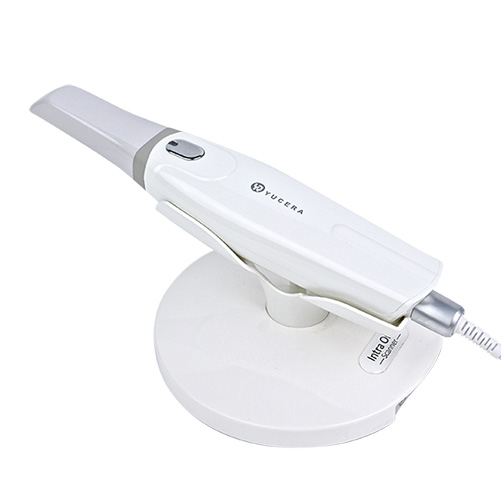
High-precision 3D scanning, AI calibration, full-arch accuracy.
learn more
40-min full sintering with 57% incisal translucency and 1050 MPa strength.
learn more
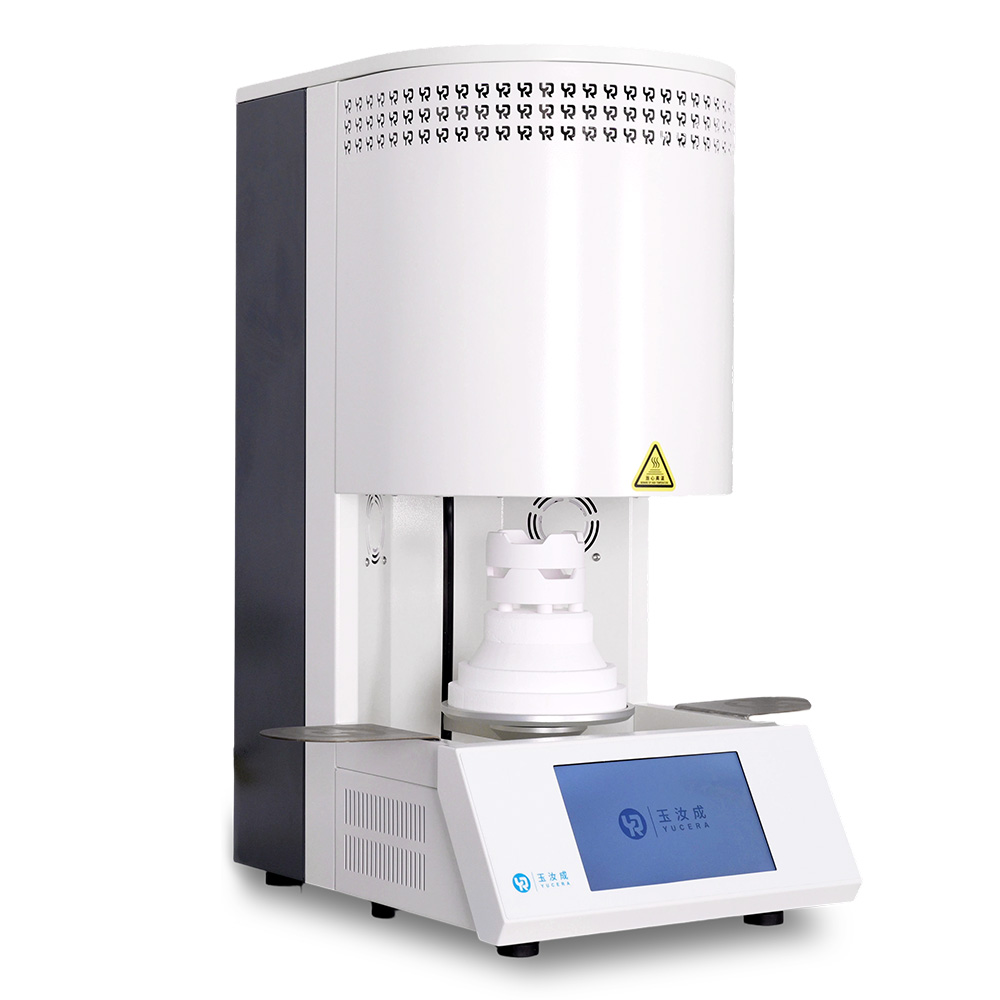
40-min cycle for 60 crowns, dual-layer crucible and 200°C/min heating.
learn more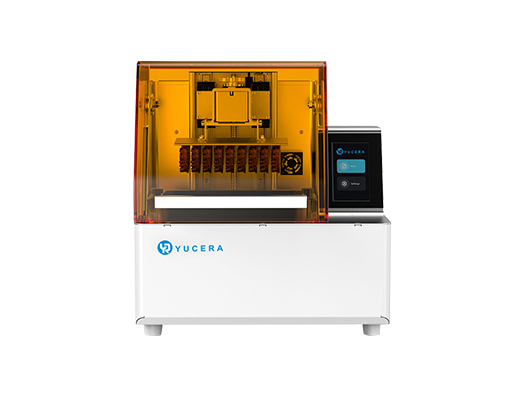
High-speed LCD printer for guides, temporaries, models with 8K resolution.
learn more


2026-04-02
2026-01-19

2025-09-04


