

 中 文
中 文
From $100 to $1000, From Resin to Ceramic, How Should I Choose a Crown?
2024-12-27
2026-09-21
Zirconia has become an increasingly important material for fixed dental restorations, including crowns, bridges, and veneers. As zirconia restorations become thinner, however, bonding becomes an increasingly important part of the clinical workflow.
For conventional zirconia restorations with sufficient thickness, a bonding strategy based on air abrasion and 10-MDP can provide both mechanical and chemical interaction at the zirconia-resin interface.
For ultra-thin zirconia veneers, particularly restorations below 0.5 mm, the bonding strategy requires a different level of consideration. The goal is not simply to maximize bond strength, but to create a predictable interface while taking restoration thickness and surface-conditioning requirements into account.
Two different approaches can therefore be considered:
Understanding how these approaches work—and when each may be appropriate—can help clinicians and dental technicians make more informed decisions when working with zirconia veneers.
The first step in understanding zirconia bonding is recognizing the difference between zirconia and glass ceramics.
Glass ceramics contain a silica-based glass phase. This allows conventional surface treatment protocols, such as hydrofluoric acid etching followed by silane application, to create a suitable bonding surface.
Zirconia is different.
As a polycrystalline ceramic, zirconia does not contain the conventional glass phase found in silica-based ceramics. Therefore, the traditional approach of:
Hydrofluoric acid etching → silane → resin cement
cannot simply be transferred to zirconia.
Instead, zirconia bonding generally relies on a combination of mechanical surface conditioning and chemical interaction with functional monomers.
Among the most widely discussed approaches are air abrasion and the use of phosphate-functional monomers such as 10-MDP.
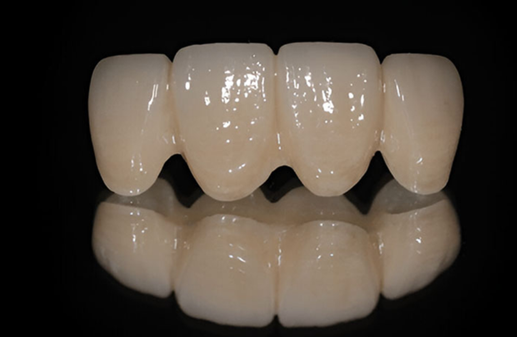
Not every zirconia restoration has the same bonding requirements.
A conventional zirconia restoration with adequate thickness generally provides a different mechanical environment from an ultra-thin veneer. As restoration thickness decreases, the bonding interface becomes increasingly important to the overall restoration design.
For zirconia veneers below approximately 0.5 mm, surface treatment therefore needs to be considered together with:
This does not mean that restoration thickness alone determines the bonding protocol. Rather, thickness should be considered an important starting point when evaluating the appropriate surface-treatment strategy.
A useful way to think about it is:
Thicker conventional zirconia restorations can place greater emphasis on mechanical surface conditioning combined with 10-MDP chemistry, while ultra-thin zirconia veneers may benefit from greater attention to the chemistry and preservation of the bonding interface.
For conventional zirconia restorations, particularly those above approximately 0.8 mm, APC represents a commonly discussed bonding approach.
In this context, APC can be understood as:
The basic principle is straightforward:
Air abrasion creates a suitable mechanical surface, 10-MDP contributes chemical interaction, and resin cement completes the bonding interface.
Air abrasion modifies the zirconia surface by creating microscopic surface irregularities.
This can improve mechanical interlocking between the conditioned zirconia surface and the resin material. Surface conditioning can also influence surface energy and wettability, which may contribute to improved interaction with subsequent bonding materials.
However, air abrasion should not be treated as a one-size-fits-all procedure.
Particle size, air pressure, application distance, and treatment time can vary according to the zirconia material and the manufacturer's instructions. These parameters should therefore be selected according to the validated protocol for the specific material rather than treated as universal values.
Mechanical roughening is only one part of the bonding process.
Zirconia surfaces can also interact with functional phosphate monomers, particularly 10-methacryloyloxydecyl dihydrogen phosphate (10-MDP).
The phosphate-functional group can interact with the zirconia surface, while the methacrylate group can participate in resin polymerization.
This provides a chemical component to the zirconia-resin interface.
As a result, the APC approach combines two complementary mechanisms:
Mechanical conditioning
10-MDP chemical interaction
Resin cement
This is fundamentally different from relying on conventional silane treatment alone.
GCSD, or Glass-Ceramic Spray Deposition, represents a fundamentally different approach to zirconia surface treatment.
Rather than relying primarily on removing or roughening the zirconia surface, GCSD introduces a new functional layer onto the surface.
The basic concept is:
Zirconia surface
↓
Glass-ceramic spray deposition
↓
Silica-rich surface layer
↓
Surface suitable for silane-related chemistry
In other words, GCSD focuses on changing the chemical characteristics of the bonding interface rather than relying only on mechanical roughening.
A simple way to describe the difference is:
APC modifies the zirconia surface, while GCSD adds a functional surface layer to the zirconia.
GCSD deposits a silica-rich glass-ceramic layer onto the zirconia surface.
This creates a surface with silica-related chemical characteristics that can interact with silane-based bonding chemistry.
The objective is not to turn the zirconia itself into glass ceramic. Rather, the process introduces a functional surface layer between the zirconia and the resin bonding system.
This distinction is important.
A more technically accurate description is:
GCSD deposits a silica-rich glass-ceramic layer onto the zirconia surface, creating a surface that can interact with silane-based bonding chemistry.
When zirconia restorations become extremely thin, surface treatment needs to be considered more carefully.
For a veneer below 0.5 mm, the available material thickness is limited. Therefore, the surface-conditioning protocol should not be evaluated solely by asking how much it increases bond strength.
Other questions also become relevant:
GCSD provides a different approach to these questions.
Instead of primarily modifying the zirconia through mechanical roughening, it introduces a silica-rich functional layer onto the surface.
This creates a surface that can interact with silane-related chemistry and subsequently with a resin bonding system.
For this reason, GCSD is particularly interesting as a surface-engineering approach for ultra-thin zirconia veneers.
However, this does not mean that every zirconia veneer below 0.5 mm must use GCSD. The appropriate strategy still depends on the zirconia material, restoration design, clinical situation, and validated bonding protocol.
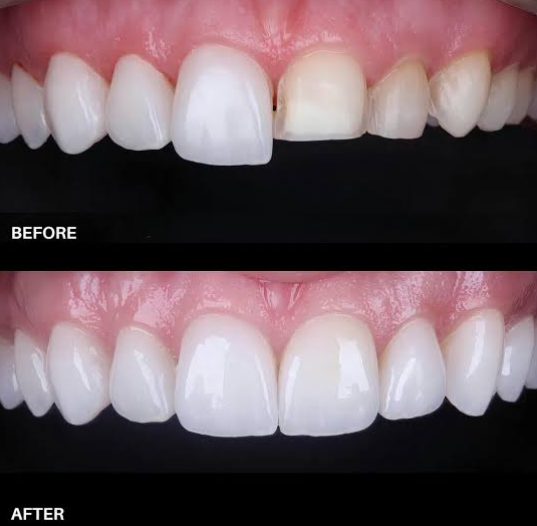
The key difference between APC and GCSD is not simply which one provides a higher bond strength.
They approach the bonding interface in fundamentally different ways.
| Factor | APC | GCSD |
|---|---|---|
| Basic concept | Modify the zirconia surface | Add a functional surface layer |
| Main treatment | Air abrasion | Glass-ceramic spray deposition |
| Mechanical effect | Surface roughening | Not primarily based on mechanical roughening |
| Chemical mechanism | 10-MDP interaction | Silica-rich surface + silane-related chemistry |
| Surface condition | Roughened zirconia | Silica-rich functional layer |
| Typical discussion | Conventional zirconia restorations | Ultra-thin zirconia veneers |
| Main concept | Roughen + Activate | Add + Functionalize |
These approaches should not simply be viewed as an old technique versus a new technique.
They represent two different ways of engineering the zirconia-resin interface.
Restoration thickness can provide a useful starting point, but it should not be the only factor.
For conventional zirconia restorations above approximately 0.8 mm, an APC-type approach can be considered:
Air abrasion → 10-MDP → Resin cement
The principle combines mechanical surface conditioning with chemical interaction.
The exact air-abrasion parameters and bonding materials should always follow the instructions provided for the specific zirconia and bonding system.
This intermediate range should not automatically be assigned to one bonding protocol.
The decision should consider:
In other words, the bonding strategy should be selected according to the complete clinical situation rather than thickness alone.
For ultra-thin zirconia veneers, the focus can shift toward maintaining a predictable bonding interface while avoiding unnecessary surface alteration.
GCSD represents one possible approach:
Zirconia
↓
GCSD surface deposition
↓
Silica-rich surface
↓
Silane-related chemical interaction
↓
Resin cement
This approach is particularly interesting because it changes the surface chemistry rather than relying primarily on mechanical roughening.
A common mistake when discussing zirconia bonding is to focus entirely on the resin cement.
In reality, the final bonding interface is influenced by several interconnected factors:
Zirconia material
↓
Surface treatment
↓
Chemical primer
↓
Resin cement
↓
Tooth substrate
↓
Clinical procedure
The resin cement is therefore only one component of the complete bonding system.
A well-designed bonding strategy should consider the compatibility of every step rather than treating the cement as an isolated factor.
For zirconia veneers, there is no single bonding protocol that can automatically be considered the best for every clinical situation.
Instead, the bonding strategy should be selected according to restoration thickness, zirconia composition, preparation design, tooth substrate, surface treatment, and the requirements of the bonding system.
For conventional zirconia restorations, particularly those above approximately 0.8 mm, the APC concept combines air abrasion with 10-MDP chemistry to create both mechanical and chemical interaction at the bonding interface.
For ultra-thin zirconia veneers below 0.5 mm, GCSD offers a different surface-engineering concept. By depositing a silica-rich glass-ceramic layer onto the zirconia surface, it creates a surface with chemical characteristics that can interact with silane-based bonding chemistry.
The two approaches are therefore not simply competing techniques. They represent different ways of engineering the zirconia-resin interface.
Ultimately, the goal is not simply to choose a stronger cement.
The key is to design the right bonding interface for the restoration.

Dry & wet milling for zirconia, PMMA, wax with auto tool changer.
learn more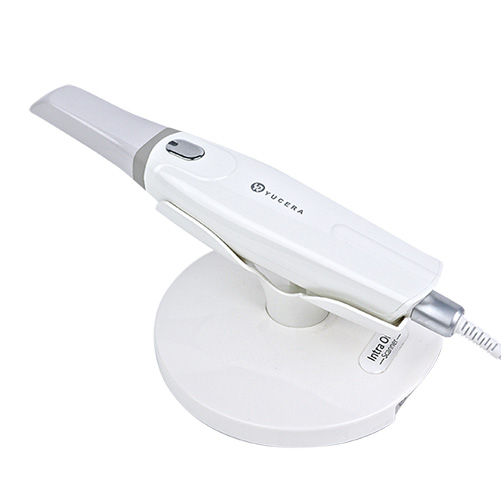
High-precision 3D scanning, AI calibration, full-arch accuracy.
learn more
40-min full sintering with 57% incisal translucency and 1050 MPa strength.
learn more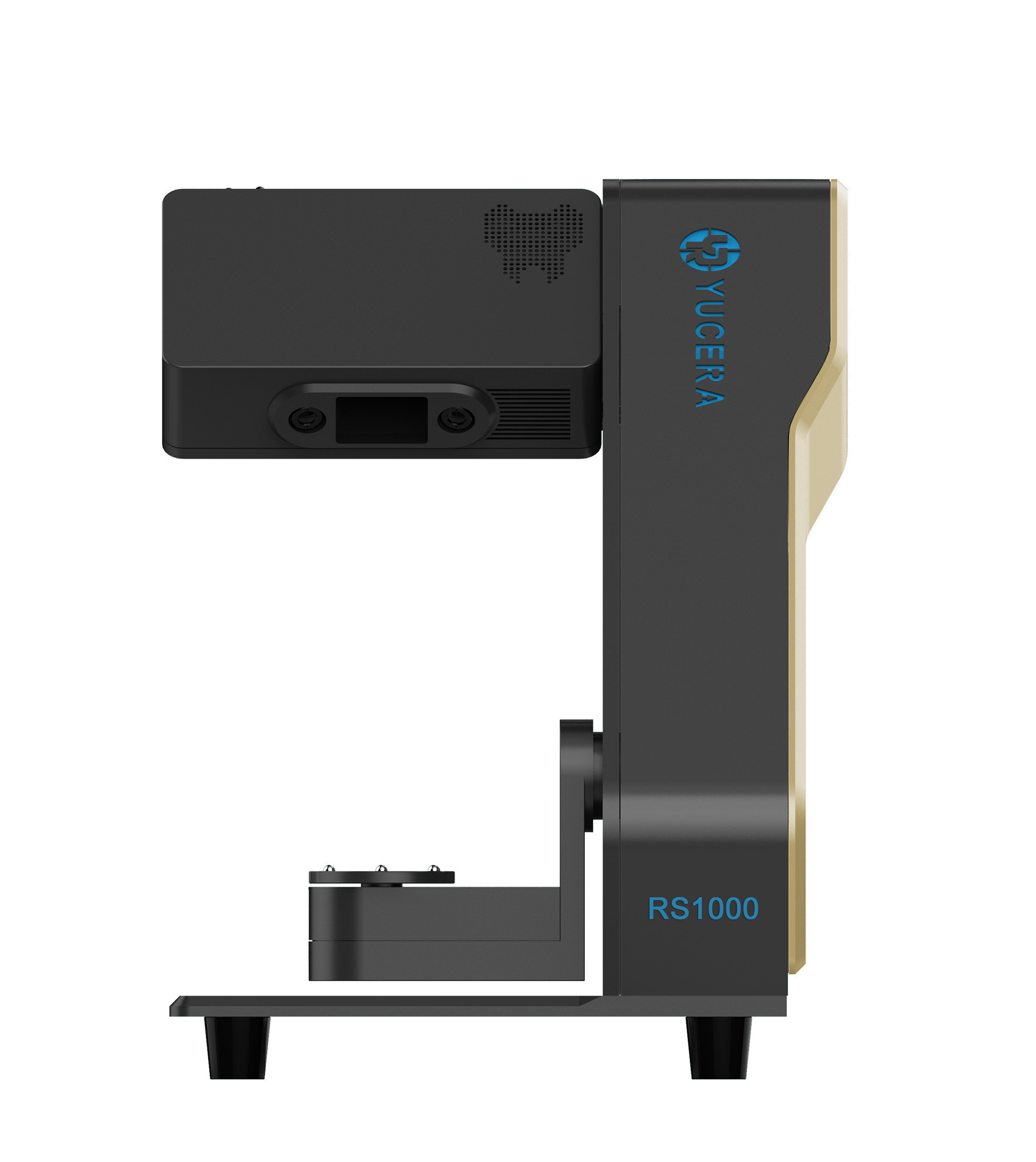
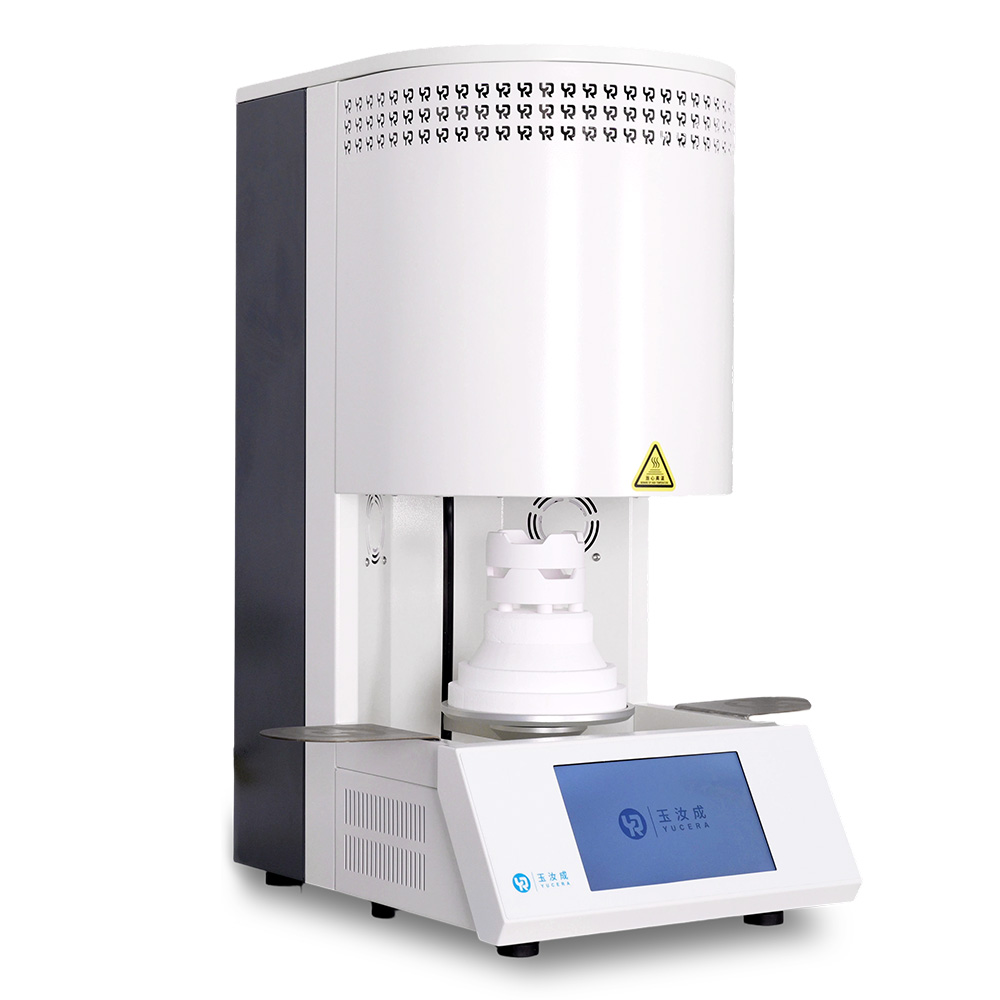
40-min cycle for 60 crowns, dual-layer crucible and 200°C/min heating.
learn more
High-speed LCD printer for guides, temporaries, models with 8K resolution.
learn more